How to Oil and Maintain Decking
17 July 2026 Joe HartleyBeginnerHalf a day to a weekend14 comments
Tools
- Stiff brush or deck brush
- Bucket and mild detergent or deck cleaner
- Garden hose (gentle spray)
- Decking oil and stirring stick
- Brush, pad, or roller suited to oil
- Cloths for excess
- Gloves and dust sheets for paths
Decking oil will not rebuild rotten joists, but it does slow the silvering, helps shed water, and makes the next clean easier. Work on a dry day, clean properly first, and wipe off puddles of oil that never soak in. Thick shiny coats go sticky and attract grit.
If the boards are not down yet, lay them first: how to lay timber decking on joists. Frame problems belong in how to build a decking frame. Composite surfaces rarely want oil; see how to lay composite decking and clean to the brand sheet instead.
Oil, stain, or leave it to grey?
| Finish | What it does | Best when |
|---|---|---|
| Clear or tinted decking oil | Feeds the surface, brings grain up, needs regular refresh | Softwood you want to keep looking like timber |
| Decking stain | More colour hold, can hide patchy weathering | Boards that already look uneven |
| Leave unfinished | Goes silver-grey; still needs cleaning for slip | You like the weathered look and will scrub algae |
Composite and some heavily capped boards are not oil candidates. Oil sits on the plastic-rich surface and mottles. Hardwoods often take oil well but need longer dry times and sometimes a different product; check the tin against the timber species.
Pick a dry spell with no rain forecast for the drying window on the tin (often overnight, sometimes longer). Cold, damp UK mornings slow everything; afternoon sun on black oil can flash-dry and lap-mark.
Clean, then oil
1. Clear the deck
Move planters and furniture. Sweep grit out of grooves. Grit under a brush turns into sandpaper and scratches softwood.
2. Wash the surface
Mix a deck cleaner or mild detergent as directed. Scrub with the grain using a stiff brush. For green algae and slime, treat seriously: slippery boards are an injury risk, and oil locked over growth fails early.
Rinse with a gentle hose. Avoid a pressure washer on full blast that drives water into end grain and fuzzes the surface into raised nap. Let the timber dry fully. Oil on damp boards traps moisture and peels in sheets.
3. Spot-fix before you commit
Replace split boards, punch proud screws, and treat cut ends with end-grain preservative if you have bare fresh cuts. Oiling over a proud screw head just highlights it forever.
4. Apply the oil
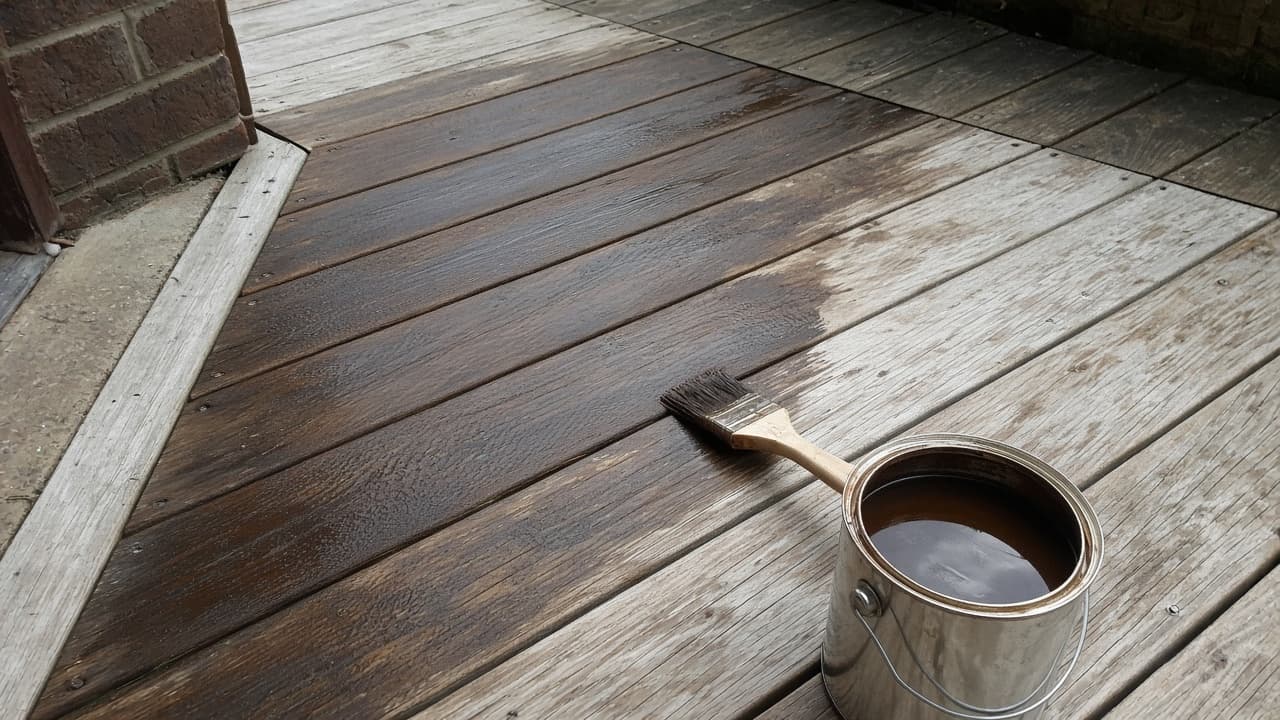
Stir the tin; pigments settle. Brush or pad thin coats along the board length. Work two or three boards at a time so edges stay wet and you avoid tide marks. Wipe pooled oil out of grooves after 15–20 minutes (or as the tin says). Puddles stay tacky and collect patio dust in a dark stripe.
5. Second coat if needed
Many oils want a second thin coat after the first has absorbed. Do not build a varnish-like skin on horizontal decking; foot traffic will scar it. Keep oil off neighbouring render and patio slabs with a cloth as you go.
6. Cure before the furniture returns
Stay off the deck until it is touch-dry, then give it longer before dragging metal chair feet. Check the tin for recoat and light-use times; cool weather stretches both.
Maintenance rhythm that actually happens
- Sweep or rinse grit through the year so grooves do not hold compost and moss.
- Clean algae in spring before you re-oil.
- Re-oil when water stops beading and the colour looks hungry (often annually on south-facing softwood, longer on sheltered hardwood).
- Lift planters occasionally; trapped wet pots blacken boards in neat circles.
Mistakes that waste a tin of oil
- Oiling over green slime so the finish fails and the deck stays slippery.
- Pouring oil on thick and leaving it shiny. Horizontal timber wants thin, wiped coats.
- Pressure-washing to bare fuzz, then oiling the nap into a rough, dark sponge.
- Using leftover fence creosote-style treatments not rated for deck foot traffic.
When to call a landscaper
If boards spring underfoot, joists smell rotten, or fixings pull through, stop decorating and repair the frame. Oiling a failing structure only delays the rebuild. Large commercial clean-and-coat kits make sense when the deck is big and green end-to-end and you would rather hire a weekend than fight it with a household brush.
Related reading: lay timber decking on joists, lay composite decking, build a decking frame, and fix squeaky decking boards.
FAQ
How often should I oil decking in the UK?
Often once a year for exposed softwood, sometimes every two years for sheltered or hardwood decks. Re-oil when water soaks in instead of beading and the colour looks flat. South-facing and heavily used decks age faster.
Can I oil damp decking?
No. Let boards dry after cleaning. Oil over damp timber traps moisture, stays tacky, and fails early. If in doubt, wait another fair day.
Is decking oil the same as fence treatment?
Not always. Use a product labelled for decking and foot traffic. Fence-only treatments can stay greasy, smell strong, or wear badly under chairs and bare feet.
14 comments