How to Put Up Shelves on Plasterboard
7 August 2026 Joe HartleyIntermediate1–3 hours10 comments
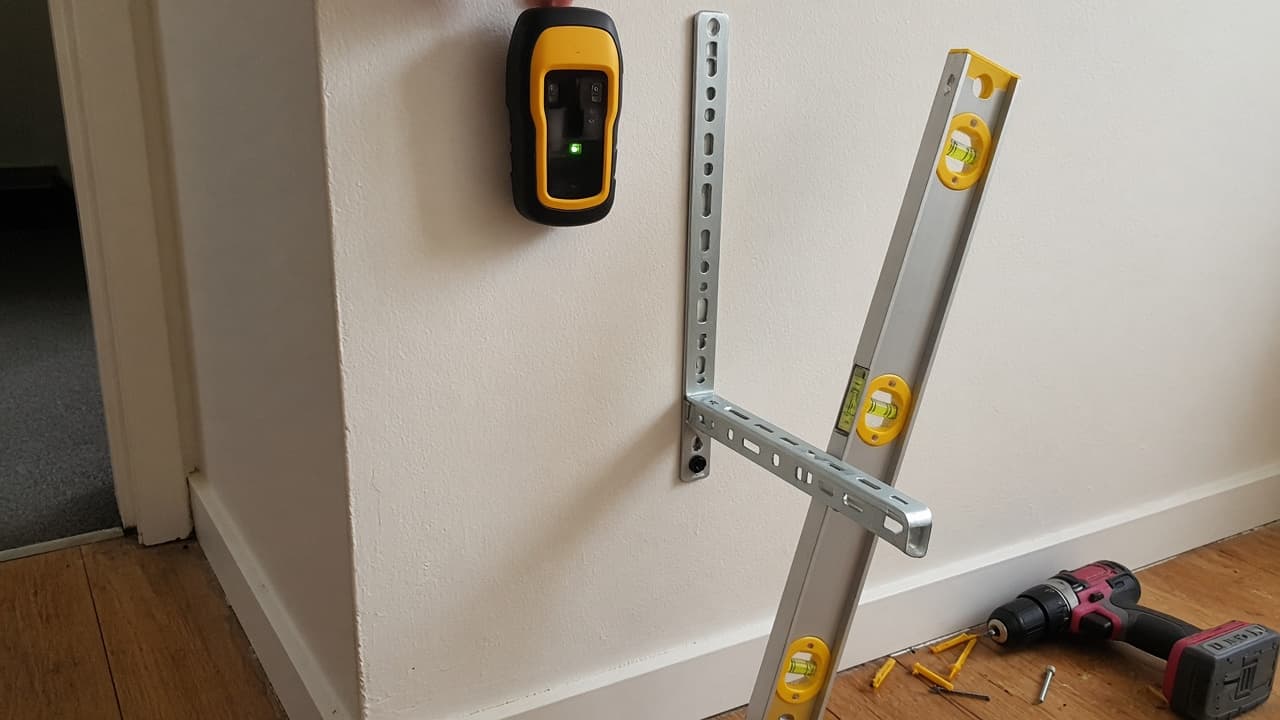
Tools
- Tape measure, pencil, and spirit level
- Stud detector or strong magnet
- Drill and screwdriver bits
- Hollow-wall anchors rated for the load
- Shelf brackets and boards
Plasterboard will not hold a loaded shelf on ordinary wall plugs meant for brick. The board is a thin skin over a timber or metal frame. Put up shelves on plasterboard by finding studs or noggins, or by using hollow-wall fixings sized for the weight you actually plan to store.
This is the plasterboard route. For the general wall-type overview, start with how to hang a shelf. Brick or block walls need masonry plugs instead.
Is the wall really hollow?
| Clue | Likely wall | Shelf approach |
|---|---|---|
| Soft tap, hollow sound | Plasterboard on studs | Stud screws or hollow-wall anchors |
| Hard, dull tap; drill dust is grit or brick | Masonry | Masonry plugs; not this guide |
| Soft then hard a few millimetres in | Plasterboard over old masonry | Treat as hollow for the board layer; check depth before using long screws |
| Magnet sticks in a vertical line every 400–600 mm | Timber studs behind | Fix into studs where brackets land |
Knock gently across the wall. A duller thud often marks a stud. A cheap stud detector helps, but confirm with a fine pilot hole in a mark that will sit behind a bracket. In many UK homes studs are 400 mm or 600 mm centres; noggins (horizontal timber between studs) are common at mid-height in older stud walls.
Kit that matches the load
| Item | Notes |
|---|---|
| Shelf and brackets | Span no more than the bracket maker allows under full books |
| 4–5 mm coach screws into studs | Through the bracket into solid timber, not into the board alone |
| Metal cavity anchors or toggle bolts | For light display shelves between studs; read the pack rating |
| Plastic expanding plasterboard plugs | Fine for pictures; weak for books unless the pack says otherwise |
| Spirit level | Long enough to span two brackets |
Heavy books on a long board need timber behind the board, not hope. If you cannot hit a stud under every bracket, either move the shelf, add a timber batten fixed into studs first, or keep the load light and spaced.
Step-by-step
1. Mark height and find the timber
Decide shelf height. Mark a level line. Sweep the stud detector (or magnet) along that line and mark stud centres. Transfer those marks to where each bracket will sit. If a bracket misses timber, either shift the set or plan a rated hollow-wall fixing for that hole only.
2. Choose the fixing for each hole
Into a stud: drill a pilot, then drive a screw long enough to bite at least 30–40 mm into the timber after the board. Between studs: use metal cavity anchors or spring toggles rated above your expected load. Avoid short plastic plugs sold for “light fittings” when the shelf will take paperbacks end to end.
3. Fit the first bracket dead level
Drill, fit the fixing, and screw the first bracket. Check it is plumb and that the shelf seat is level front to back. On plasterboard, overtightening can crush the paper face and loosen the fixing before you load anything.
4. Set the second bracket from the shelf
Rest the shelf on the first bracket. Hold the second bracket under the free end, set the spirit level on the shelf, and mark the holes. Fix the second bracket. For long shelves, add a third bracket under the middle, preferably into a stud or noggin.
5. Load gradually and watch the board
Fit the shelf. Put weight on slowly. Listen for cracking paper and watch for bracket tips pulling forward. A slight flex in a long pine board is normal; a fixing that creeps out of the wall is not. Empty the shelf and rethink the fixings if anything moves.
Mistakes that drop shelves overnight
- Using brown masonry plugs in plasterboard. They spin and pull out.
- Trusting a stud detector without a confirming pilot. Pipes and cables also set some detectors off.
- Spacing brackets only at the ends of a 1.8 m board loaded with books. The middle sags and levers the end fixings.
- Hanging a heavy run from hollow-wall anchors alone when you could have hit two studs with a batten.
When to stop and get help
Call a joiner or competent fixer if you need a long, heavily loaded run and there are no studs where the brackets must land, or if you suspect cabling in the zone (sockets nearby, switches above). Cutting a hatch to fit a noggin is a bigger job than most weekend shelf hangs.
Same cluster: how to build a simple bookshelf if freestanding suits you better, how to fit alcove shelves for chimney breasts, how to hang a shelf for the wall-type overview, and how to hang a TV on plasterboard for heavier wall loads.
FAQ
Can I put shelves on plasterboard without hitting a stud?
Yes for light display loads, if every fixing is a rated hollow-wall anchor and you stay within the pack rating. For books, kitchen storage, or anything that will grow over time, hit studs or fix a timber batten into studs and mount the brackets on that.
What are noggins and why do they help?
Noggins are horizontal timbers fixed between studs. If a bracket lands on a noggin, you get solid timber without moving the shelf height. Knock and probe carefully; noggins are not always where you hope. In 1930s semis they often sit around mid-wall height where an old picture rail once was.
How much weight can plasterboard shelves take?
It depends on the fixings and span, not the board brand. Two brackets into studs with sensible spacing will carry a normal book load on a short shelf. The same shelf on plastic plugs between studs may fail with a few hardbacks. Check the fixing rating and leave a margin.
10 comments