How to Fix a Dripping Shower Head
11 July 2026 Joe HartleyBeginner20–45 minutes3 comments
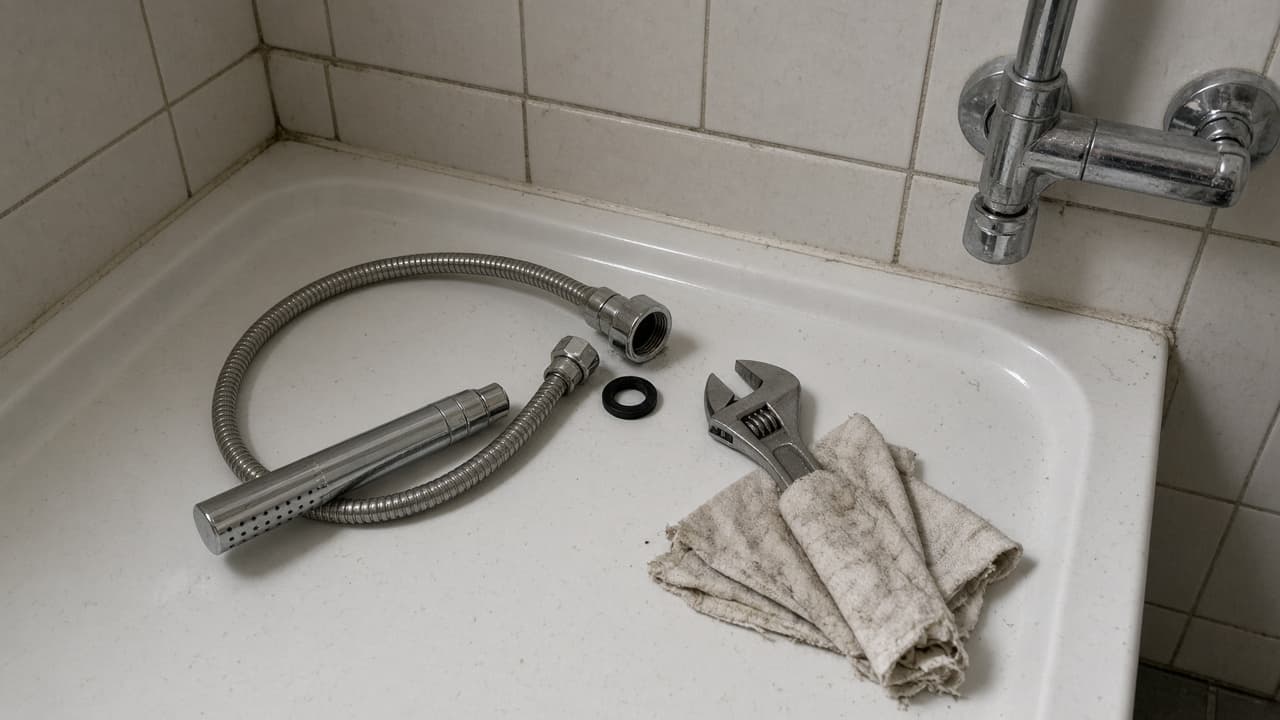
Tools
- Adjustable spanner
- Replacement hose washers
- Soft cloth
- White vinegar or descaler (optional)
- PTFE tape
A shower head that drips after you shut the mixer off is annoying and stains the tray. Sometimes the head or hose washer is the culprit. Sometimes the mixer valve is not closing and the head is only where the water escapes. Fixing a dripping shower head starts with working out which end is at fault.
If the drip is from a bath spout with a shower diverter engaged, that is a different path: how to fix a dripping bath tap spout.
Head, hose, or valve?
| What you see | Likely fix |
|---|---|
| Drip from the head only for a minute after use, then dry | Residual water in the head or hose (normal) |
| Steady drip for hours with mixer firmly off | Worn hose washer, blocked head seating, or mixer cartridge not sealing |
| Weep at the hose-to-head or hose-to-mixer joint | Flat or missing rubber washer in the union |
| Drip from the mixer body or controls, head dry | Mixer / cartridge fault, not the head |
| Handset drips when hung down, stops when held level | Water trapped in a loop of hose; rehang or change hose route |
A one-minute trickle after a hot shower is often just cooling water expanding out of the rose. A drip that fills a cup overnight is a seal or valve problem.
Isolate if you will undo unions
For a hose washer swap you can often work with the mixer off and a towel in the tray. If you need to open the mixer itself, close the isolating valves on the shower supplies (often behind an access panel or under the bath) or isolate at the stopcock. Open the shower briefly to relieve pressure before you crack a union.
UK shower hoses usually use ½″ BSP unions. The thin rubber washer inside each nut does the sealing; PTFE on the chrome face is the wrong habit and makes the next strip harder.
What you will need
| Item | Notes |
|---|---|
| Spare hose washers | Take the old one to a DIY store; thickness matters |
| Adjustable spanner | Wrap chrome with a cloth |
| Descaler or white vinegar | For a furred rose that weeps from blocked holes |
| Replacement head or hose | When threads are rounded or the rose will not seal |
| Torch | Access panels under baths are dark |
Step-by-step
1. Time the drip
Dry the rose with a cloth. Wait five minutes with the mixer off. If it is still dripping at a steady rate, continue. If it has stopped, you cleared residual water, not a fault.
2. Check the hose washers first
Undo the union at the head, then at the mixer, with the cloth-wrapped spanner. Lift out each rubber washer. Replace any that are flattened, split, or missing. Seat the new washer flat in the nut before you refit. Hand-tight plus a snug quarter-turn is enough; over-tightening cracks plastic nuts on cheap hoses.
3. Clean or swap the head
Unscrew the rose if it separates. Soak limescale in warm vinegar, rinse, and clear the nozzles with a soft brush (not a needle that enlarges the holes). Refit any internal screen filter the same way round. If the head’s sealing face is scored or the thread is soft, replace the head rather than fighting it.
4. Rehang and test
Refit the hose without twisting it into a permanent kink. Open the isolators, run the shower, then shut it firmly off. Dry the rose and watch for ten minutes. A returning drip with good washers points at the mixer valve.
5. If the mixer is at fault
Thermostatic shower cartridges and ceramic discs wear like tap cartridges. That is a valve strip, not a head job. Treat it like how to replace a ceramic disc tap cartridge only if your shower uses a user-serviceable ceramic cartridge and you can isolate both supplies. Many thermostatic valves are brand-specific; match the cartridge before you dismantle the chrome.
For general spout drips on mixers elsewhere in the house, see how to fix a dripping mixer tap. For a classic rubber washer, see how to change a tap washer.
Mistakes that leave a drip
- Blaming the head when the mixer never shuts off cold or hot.
- Winding PTFE over a face that needs a rubber washer.
- Crushing a plastic hose nut until the thread strips.
- Calling a one-minute cool-down drip a fault.
When to call a plumber
Stop if you cannot isolate the shower, if the valve is a sealed thermostatic unit with no spare cartridge, or if water is escaping into a wall cavity behind a concealed mixer. Concealed valves and electric showers are not the same job as a hose washer. Electric shower internals and fixed wiring are electrician / manufacturer territory, not a DIY cartridge swap.
Related in this cluster: how to replace a bath mixer tap when the whole bath/shower mixer is finished.
FAQ
How do I fix a dripping shower head?
Time the drip, renew the hose washers, clean or replace the head, then suspect the mixer cartridge if it still weeps with the valve off.
Why does my shower head drip after I turn it off?
Short drips are leftover water. Long drips are usually a flat hose washer or a mixer that is not sealing.
Can a dirty shower head cause dripping?
A furred rose can weep oddly from blocked nozzles, but a steady overnight drip is more often a washer or valve seal. Descale anyway; it improves the spray.
Do I need to turn the water off to change a shower hose washer?
Best practice is to isolate. Many people crack the union with the mixer off and a towel ready, but residual pressure can still spit. Isolating valves make it calmer.
3 comments