How to Treat Mould on Walls Safely
2 September 2026 Joe HartleyBeginner1–3 hours plus drying time16 comments
Tools
- Disposable gloves
- Eye protection
- Face mask suitable for mould/dust (follow product guidance)
- Old clothes or disposable coveralls
- Mould wash or cleaner labelled for painted walls
- Bucket, sponge, soft cloths
- Bin bags for cloths and debris
- Hygrometer (optional)
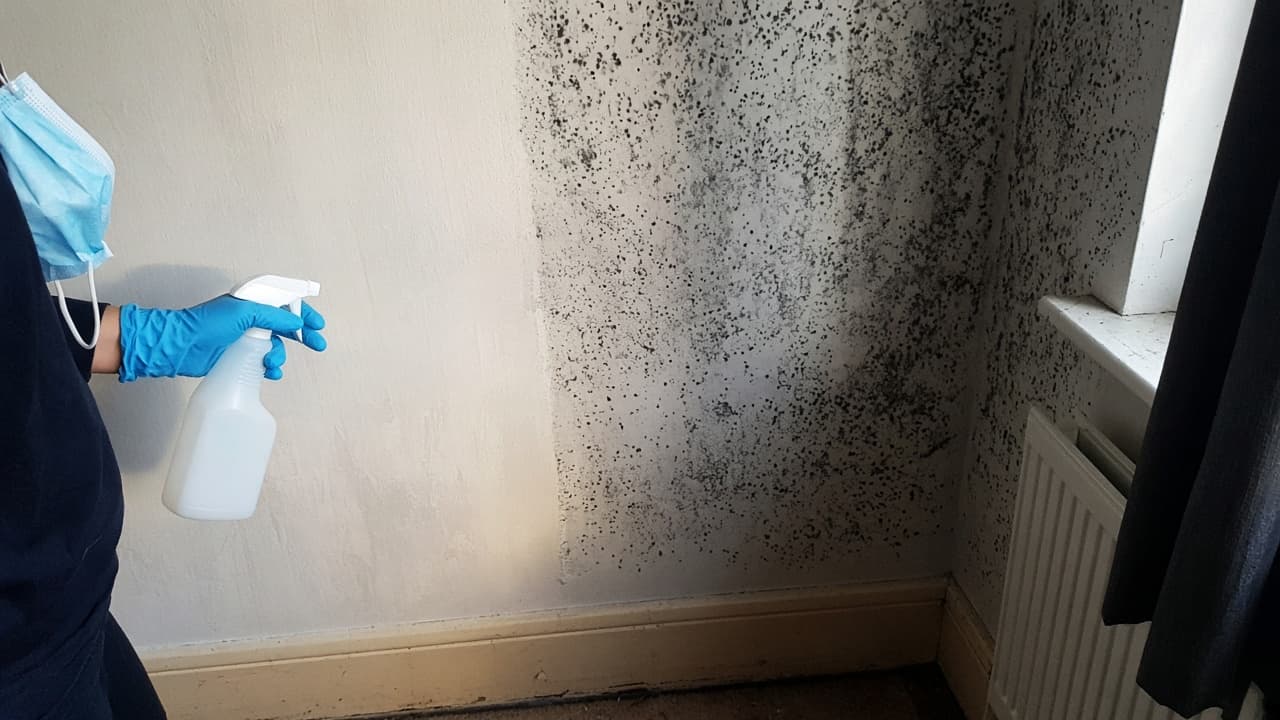
Black or speckled mould on cold UK walls is usually condensation, not a mysterious rising-damp curse. Bleach can bleach the stain and leave roots in the paint film, then the bloom returns with the next cold snap. Treat it as a short clean plus a moisture fix: protect yourself, wash properly, dry fully, then change how that wall gets wet.
If the pattern sits in a low tide line with salts and crumbling skirting, stop. That is often rising or penetrating damp, not condensation mould. Get a damp diagnosis before you scrub and redecorate.
PPE and room setup (do this first)
Mould spores and cleaner fumes are the hazard, not just the ugly spots.
- Gloves and eye protection. Cleaners sting; scrubbing throws droplets.
- Mask. Use one rated for the dust and mist you will make. A loose fashion mask is not enough for heavy growth.
- Ventilate the work area. Open a window in the room you are cleaning. Keep doors to the rest of the home shut if you can.
- Soft furnishings. Move beds and sofas away. Bag or wash nearby fabrics that sat against the bloom.
- No dry brushing or vacuuming without filtration. Sweeping dry mould into the air spreads it. Dampen, wipe, bag.
People with asthma, severe allergies, or immune issues should get someone else to clean heavy growth, or hire a specialist. Renters: photograph before and after, and tell the landlord; cleaning does not remove their duty to fix chronic damp.
Choose a cleaner (bleach is not the whole plan)
| Cleaner type | Role | Limits |
|---|---|---|
| Proprietary mould wash / fungicidal wash | Built for painted plaster; follow label dwell time | Still need drying and cause fix |
| Mild detergent solution | Light surface soiling on washable paint | Weak on established mould |
| Household bleach | Can lighten stains on non-porous surfaces | Often poor on porous paint/plaster; fumes; can leave nutrients for regrowth; never mix with ammonia or acid cleaners |
Read the label for painted walls and for any need to rinse. Do not mix products. Do not soak plaster until it goes soft.
Step-by-step clean
1. Protect floors and sockets
Lay old sheets. Keep liquid away from electrical fittings. Wipe upward from skirting so dirty water does not run into the carpet pile and vanish.
2. Apply cleaner to a manageable patch
Work a square metre at a time. Apply as the label says (spray or wipe-on). Give it the dwell time. Rushing to rinse early wastes the product.
3. Wipe, do not scour the plaster off
Use a sponge or cloth with light pressure. You want the growth off the paint film, not a crater of bare gypsum. Change cloths when they load up; wringing a filthy cloth back into the bucket re-seeds the next patch.
4. Rinse if required, then dry
Rinse only when the product says so. Then dry the wall with clean cloths and leave airflow running. A cold, still room overnight undoes the clean. A dehumidifier on in that room speeds things up; empty the tank.
5. Bag waste
Seal used cloths and disposable PPE in a bag before they dry and shed dust around the house.
6. Only then think about paint
Decorate when the wall stays dry through cold weather, not the afternoon you finished washing. Use a stain-blocking primer where browning bleeds, and an anti-mould system where the maker specifies it. Anti-mould paint is a helper, not a dehumidifier.
Fix the cause or it returns
Cleaning without a moisture plan is a calendar reminder, not a repair.
| Likely driver | What to change |
|---|---|
| Window and reveal mist | Ventilation, heat, glazing: how to stop condensation on windows |
| Cold external corner / north bedroom | Steady heat, furniture gap, maybe film: how to stop condensation in a north-facing bedroom |
| Wardrobe hard against a cold wall | Pull furniture 50–100 mm off: stop condensation in a north-facing bedroom |
| Steamy bathroom | Run the extractor through the shower and for 15–20 minutes after; open a window if there is no fan |
| Repeat blooms after every clean | Fix moisture first: stop condensation on windows and stop condensation in a north-facing bedroom |
Job-specific tell: mould in a vertical “shadow” the shape of a wardrobe back is almost always a cold pocket, not a leak inside the wall. Another tell: blooms that track the cold edge of a chimney breast or external corner while the middle of the wall stays clean.
Common mistakes
- Bleach wipe, closed windows, thick emulsion the same weekend.
- Dry-sanding mouldy paint “to key for primer” and fogging the room with spores.
- Mixing bleach with other cleaners for a stronger hit. That can produce dangerous gases.
- Treating rising damp or a gutter leak as condensation mould.
- Pushing the bed back tight to the cleaned wall the night you finish.
When to call a pro
Call a damp surveyor or experienced builder for large areas, mould after floods, suspected leaks, or growth that returns fast despite honest ventilation and cleaning. Call a doctor for health advice if anyone in the home is badly affected by spores. Landlords and agents should be pushed on structural damp and inadequate heating or ventilation; a bottle of cleaner is not a tenancy remedy.
Related reading: stop condensation on windows, stop condensation in a north-facing bedroom, draught-proof windows and doors, and fit secondary glazing film.
FAQ
Can I just paint over mould?
No. Paint over live growth usually fails and can trap problems under a fresh film. Wash, dry, fix moisture, then prime and paint.
Is bleach enough to kill mould on walls?
Bleach may lighten what you see on some surfaces, but porous paint and plaster often keep growth in the film. Use a product meant for the surface, dry properly, and remove the damp cause or the spots return.
How soon can I redecorate after cleaning?
When the wall feels dry and stays dry through a stretch of cold weather, not merely when it looks clean. Painting a still-cold, still-damp corner invites another bloom under the new coat.
When is mould a landlord issue?
Chronic condensation from disrepair, failed extractors, or inadequate heating, and any suspected penetrating or rising damp, should be reported with photos and dates. Your clean keeps the room safer while they act; it does not replace their responsibilities.
16 comments