How to Remove a Seized Tap Connector
20 August 2026 Joe HartleyIntermediate30–90 minutes9 comments
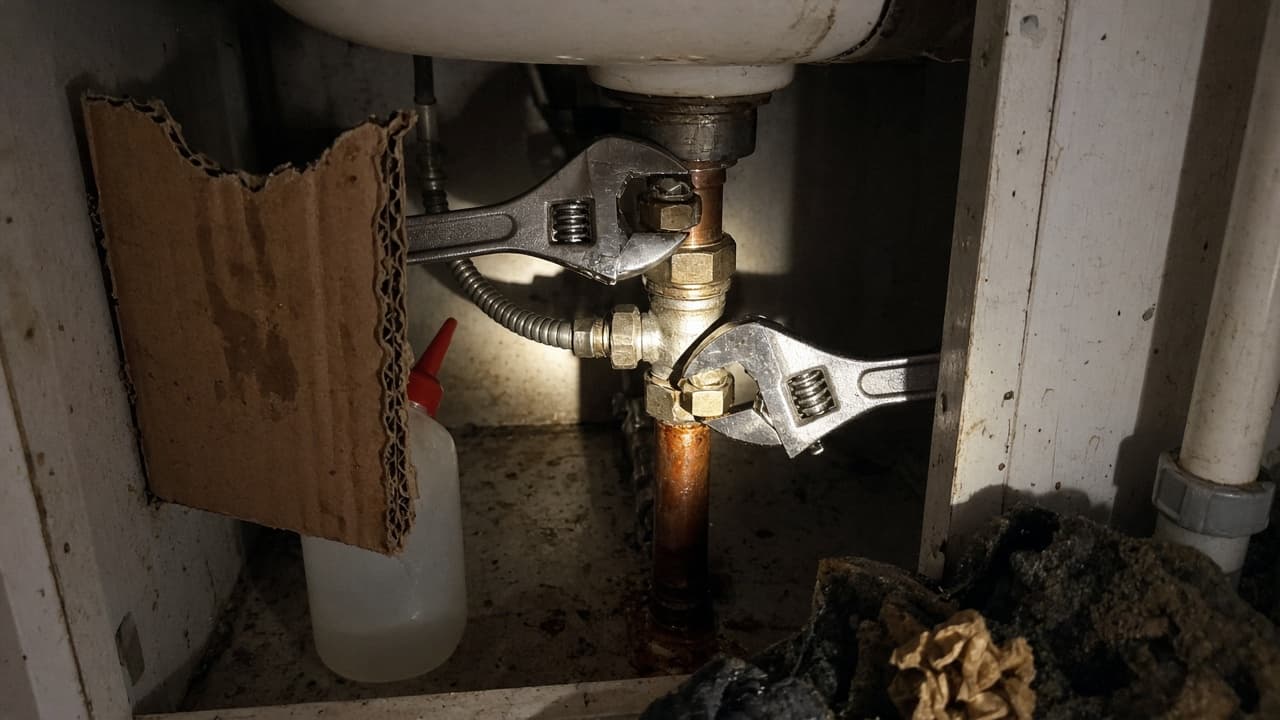
Tools
- Adjustable spanners (two)
- Basin wrench
- Penetrating oil
- Cloth and cardboard shield
- Bucket and towels
- Replacement flexi and olives if needed
Seized tap connectors are why a “simple” tap swap turns into an afternoon. Limescale, old PTFE, and soft copper all lock compression nuts and flexi unions. Removing a seized tap connector is about patience and counter-holding, not bigger levers that snap the isolator.
If the tap only needs a washer or cartridge and the tails can stay, leave the connectors alone. See how to change a tap washer or how to replace a ceramic disc tap cartridge.
Know what you are fighting
| Connector | Seizure pattern |
|---|---|
| Flexible hose with union nut | Nut stuck on isolator or tap tail thread |
| Copper compression | Nut and olive fused; pipe may twist |
| Old captive fibre washer | Nut turns but joint will not crack |
Never heat plastic isolators with a flame. If you need heat on metal, that is usually plumber territory in a cramped cupboard.
Isolate, soak, then grip
Shut hot and cold at the isolators (or the stopcock if those valves are useless). Crack the tap open so pressure drops. Slide a bucket under the joint. Soak the stuck thread with penetrating oil and leave it while you empty the cupboard and wedge cardboard against the appliance panel. The soak matters more than a longer lever; stripping flats on day one is how this job gets expensive.
Step-by-step
1. Counter-hold the isolator
Put one spanner on the isolator body and one on the nut. Turn the nut only. If the isolator spins, you will twist the pipe behind it and create a bigger leak.
2. Work the nut in tiny arcs
Break the seal with short back-and-forth moves rather than one heroic heave. A basin wrench helps when you cannot get a full swing. Keep the second spanner firm on the isolator.
3. Free a flexi from the tap end if the isolator end will not move
Sometimes the tap-tail union frees first. Undo that end, then you can turn the hose for a better angle on the stuck isolator nut. Support the tap body so you do not loosen the deck clamp by accident (how to tighten a loose tap).
4. Deal with a fused olive on copper
If the nut comes back but the pipe will not withdraw, the olive is stuck. Do not keep pulling until the pipe kinks. Cut the pipe back to clean copper if you know how to remake a compression joint, or stop and call a plumber. Reusing a crushed olive is a reliable way to get a weep.
5. Fit new connectors and test
Replace perished flexis rather than refitting stiff, kinked ones. Hand-tight plus a short spanner turn on compression fittings is usually enough. Open isolators slowly and check every joint with a dry tissue for several minutes.
Mistakes that flood the cupboard
- Turning the isolator instead of the nut.
- Rounding chrome flats with the wrong jaw size.
- Heating plastic valves.
- Reusing a dead olive “because it looked alright”.
When to call a plumber
Stop if the isolator body is cracking, the pipe is lead, the joint is soldered with no union, or you cannot counter-hold without stressing the wall plate. Access behind a fitted kitchen or a bath panel can turn a £15 flexi into damaged copper. A plumber with pipe slices and the right grips is cheaper than a ceiling stain downstairs.
Once the nut is free, fit sound connectors rather than refitting a kinked flexi: how to replace flexible tap connectors. If the tap itself is going, continue with how to replace a kitchen tap or how to replace a bathroom basin tap. Bath access is worse still: how to replace a bath mixer tap.
FAQ
How do I remove a seized tap connector?
Isolate the water, counter-hold the isolator with one spanner, and ease the nut with another in small arcs after penetrating oil. Never let the valve body twist. Replace tired flexis once they are free.
Will WD-40 free a tap connector?
A proper penetrating oil helps more than a general spray. Give it time. Oil will not fix a crushed olive or a rounded nut.
Can I cut the flexi off?
As a last resort on the hose itself, yes, if that lets you get a socket on the remaining nut. Do not cut into the isolator thread. Have a replacement flexi ready before you cut.
9 comments