How to Repair Blown Plaster
13 July 2026 Joe HartleyIntermediateHalf a day to a weekend9 comments
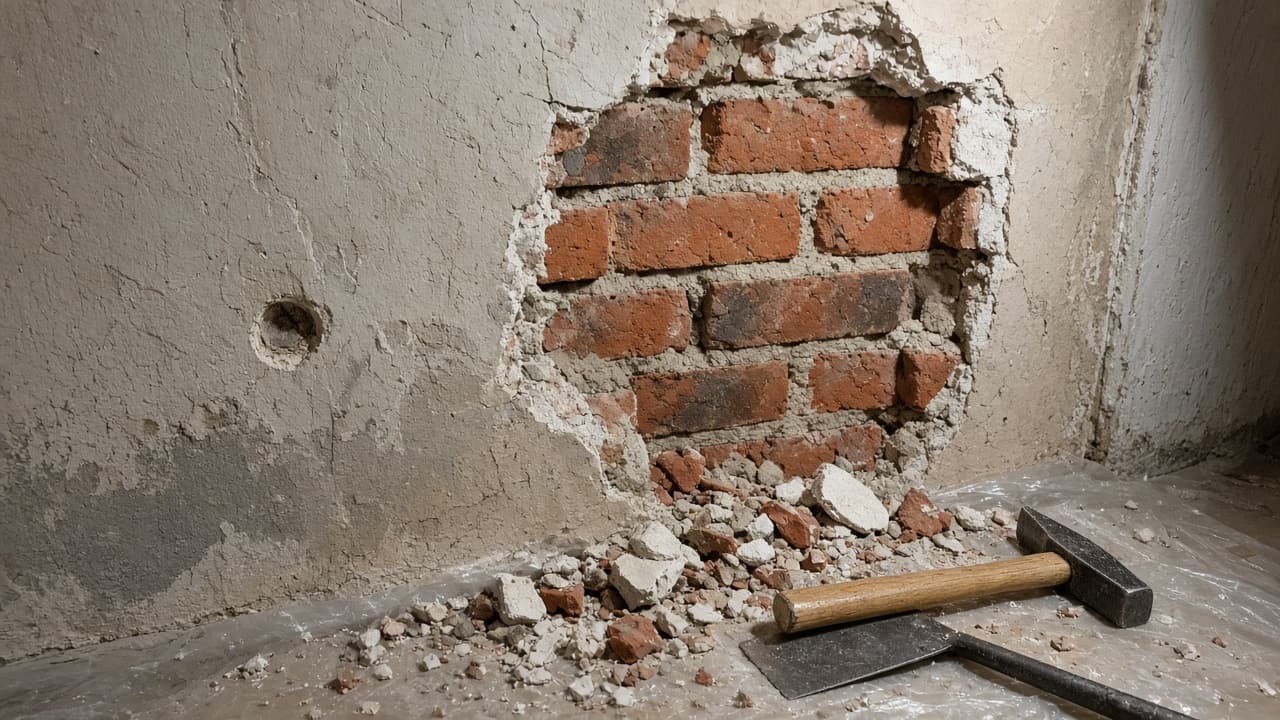
Tools
- Club hammer and bolster
- Scraper and filling knife
- Dust mask and goggles
- PVA bonding agent
- Hawk and trowel (or board and knife for small patches)
Blown plaster sounds hollow when you tap it and often peels in sheets when you scrape. Filler on top is wasted: the skim has lost its key to the background. The honest job is to cut back to firm plaster, reinstate the base, then finish flush.
Small firm cracks belong in how to fill cracks in plaster. A fist-sized hole through plasterboard is a different repair: patch a hole in plasterboard.
Confirm it is blown
Tap with a knuckle or the plastic handle of a screwdriver. Firm plaster gives a dull, solid note. Blown areas ring hollow and may flex slightly. Press gently: if the face moves or cracks spider out, mark the boundary with a pencil before you start hacking.
| Situation | Approach |
|---|---|
| Hollow patch under 0.5 m², solid background behind | Hack off, patch with bonding + skim (this guide) |
| Large areas of hollow skim on brick or block | Same method, or call a plasterer for a full reskim |
| Soft, damp, salty plaster | Dry the wall and fix the moisture first |
| Stud wall with failed plasterboard face | Cut out board and reboard; see hang plasterboard on a solid wall only if you are boarding onto masonry |
Watch for cables and pipes. UK sockets often sit on plasterboard boxes or chased conduits. Isolate power at the consumer unit before cutting near electrical points, and treat unknown chasing as live until proven otherwise.
Tools and materials
| Item | Notes |
|---|---|
| Bolster and club hammer | Controlled hacking; keep the blade nearly flat to the wall |
| Bonding or undercoat plaster | Rebuild depth on masonry |
| Finishing plaster | Thin skim over the set undercoat |
| Plasterboard offcut | Useful if you strip back to studs or need a nest for a deep void |
| Diluted PVA | Seal dusty brick or old undercoat before new plaster |
| Mesh tape | Bridge joints between old plaster and new board |
Step-by-step
1. Cut back to sound plaster
Score a neat rectangle or irregular shape around the hollow zone with a knife so the break stays controlled. Hack off all loose material until every remaining edge is solid and keyed. Leave a slight undercut where you can: new plaster grips better than a feathered paint edge.
2. Clean and damp the background
Brush out dust. On brick or block, dampen so the background does not suck the water out of fresh plaster in seconds. On very dusty surfaces, a thin diluted PVA (about 1:4) brushed on and left tacky helps. Do not leave a shiny, sealed film.
3. Rebuild the depth
Deep voids (more than about 10–12 mm) need bonding or undercoat plaster in layers, each left to firm before the next. Do not try to fill 25 mm in one pass of finishing plaster; it slumps and cracks. For a stud wall where the board itself has failed, screw in a plasterboard patch on timber or metal backing, tape the joints, then skim. Large solid-wall areas may be easier to hang plasterboard on a solid wall than to chase every hollow pocket by hand.
4. Finish flush with the old face
Once the undercoat has taken up, apply finishing plaster and rule or trowel it level with the surrounding skim. Feather onto the old plaster so you are not left with a step. Detail for the final coats sits in how to skim a wall patch.
5. Dry, sand lightly, then mist coat
Let the patch dry thoroughly. Cold rooms and thick bonding coats take longer than the tin suggests. A light sand removes trowel lines. New plaster needs a mist coat (diluted emulsion) before full-strength paint or it flashes and peels.
Mistakes that leave another hollow patch
- Filling over blown plaster instead of hacking it off.
- Sealing the background with neat PVA so new plaster cannot key.
- Building full depth with finishing plaster alone.
- Leaving soft edges that keep crumbling under the knife.
- Painting before the patch has dried through (dark, cold spots stay damp for days).
When to stop and get a plasterer
Whole walls that ring hollow, ornate cornices you would rather keep, or lime plaster in a period house are better with a tradesperson who can match the system. Persistent damp, rising salts, or suspected structural movement need diagnosis before any cosmetic patch. Condensation staining that returns after paint is a moisture problem, not a plaster problem: stop condensation stains returning on cold walls.
Also useful: repair a large hole in a plaster wall when the void is local but deep.
FAQ
How far back should I hack blown plaster?
Hack off every hollow section to a firm edge, clean and damp the background, rebuild with bonding plaster in layers if needed, then skim flush and mist coat when dry. Do not filler-skim over a drumming face.
Why does plaster blow in UK homes?
Common causes are a lost key to the background, water damage, salts, or an old skim that was never properly bonded. Central heating and modern paints can also stress weak historic coats.
Can I just stick plasterboard over blown plaster?
Only if the remaining wall is sound enough to fix into, and you accept losing depth at skirtings and architraves. Loose material behind a new board can still crack finishes. Cutting out the failed zone is usually cleaner for a patch.
9 comments