How to Hang a New Door in an Old Frame
26 June 2026 Joe HartleyIntermediate3–5 hours9 comments
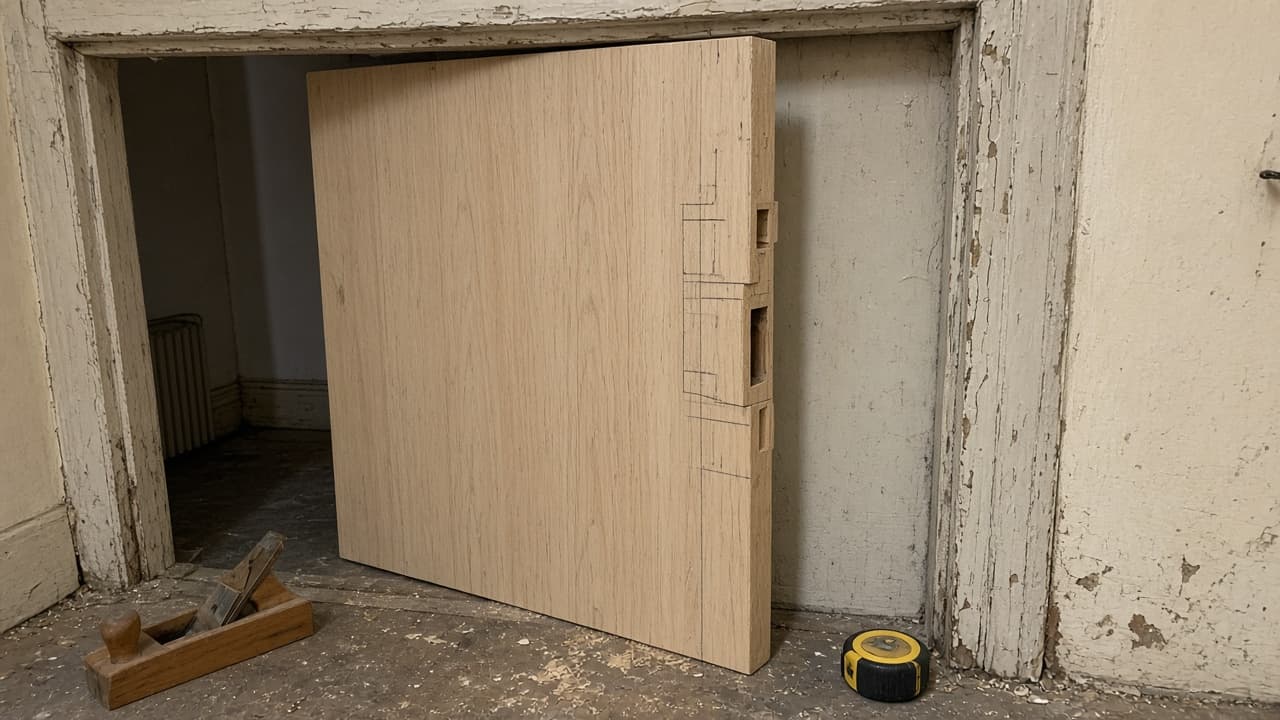
Tools
- Spirit level and long straightedge
- Tape, pencil, and combination square
- Saw and plane
- Chisel and drill
- Packers and wedges
Old UK frames are rarely a perfect rectangle. Hanging a new door in an old frame means fitting the leaf to the opening you have, not the size on the door pack. Measure the smallest width and height, then remove wood with intent.
If the lining is rotten or badly bowed, replace it: how to fit an internal door. If the frame is square, the cleaner path is how to hang an internal door.
Measure the opening, not the old door
| Measurement | How |
|---|---|
| Width | Three places: top, mid, bottom. Use the smallest. |
| Height | Both jambs. Use the smallest, then subtract floor clearance. |
| Square | Compare diagonals. A large difference means tapered edges. |
| Stop position | Note where the door should land on the stop. |
Transfer those sizes to the new door before you cut. Cutting method: how to cut a door to size. Seasonal swell still applies after you hang: ease hinge packing first, then plane the high spot lightly if needed (how to plane a door that sticks).
What you will need
| Item | Notes |
|---|---|
| Oversized or standard door | Buy the next size up if the opening is odd |
| Plane and fine saw | Tapered edges often need more plane than saw |
| Hinges | Often renew; old bent butts fight you |
| Packing card | Behind hinge leaves to nudge the leaf in or out |
Step-by-step
1. Map the rubs on a dry offer
Stand the new door in the opening on wedges. Mark every place it hits the jamb or head with pencil. Those marks are your cutting map. Do not plane blind from one height measurement alone.
2. Cut and plane to the map
Remove bulk from the bottom or latch edge first if height or width is wildly over. Leave hinge-edge planing until hinges are offered, unless the door will not enter the opening at all. Take thin shavings; hollow-core doors have a limited solid edge lipping.
3. Hang with adjustable packing
Fit hinges as in how to fit door hinges correctly. On a twisted jamb, a thin card pack behind one hinge leaf can straighten the sight line without chiselling the lining deeper. Check the latch edge gap after each change.
4. Set latch and strike to the real close position
Old strike plates are often in the wrong place for a new leaf. Recut the keep so the latch drops when the door is gently closed, not slammed. If the head gap is uneven, a slight bevel on the latch edge (leading edge eased) helps it clear the stop.
5. Live with seasonal movement
Leave a touch more clearance on the latch edge in a steamy bathroom or unheated spare room. If it sticks next winter, plane lightly rather than forcing the handle: how to plane a door that sticks.
Mistakes that wreck hollow-core doors
- Cutting past the edge lipping into the honeycomb.
- Trying to “square” a diamond opening by planing only one corner until the leaf is too narrow.
- Reusing bent hinges that spring the door off the stop.
- Ignoring a floor that slopes; the bottom edge may need a tapered cut.
When to call a joiner
If the lining needs replacement, if gaps exceed what packing can hide under architrave, or if you are into a fire door and certified frame, hire it. DIY vs labour: cost to hang an internal door DIY vs joiner.
FAQ
Can I hang a new door in a twisted old frame?
Yes if you measure the smallest width and height, cut the leaf to the opening map, renew or pack hinges, then recut the strike to the new close position. Extreme diamonds often need a new lining instead.
Should I replace the frame instead?
Yes if it is rotten, badly bowed, or the diagonals are so far out that the door would look tapered. Fitting a new lining is often cleaner than extreme planing.
Can I use the old hinges?
Only if they are flat, match the new door thickness, and the screws still bite. Bent rising butts are false economy.
9 comments