How to Replace a Socket Faceplate Like-for-Like
26 August 2026 Joe HartleyIntermediate30–60 minutes10 comments
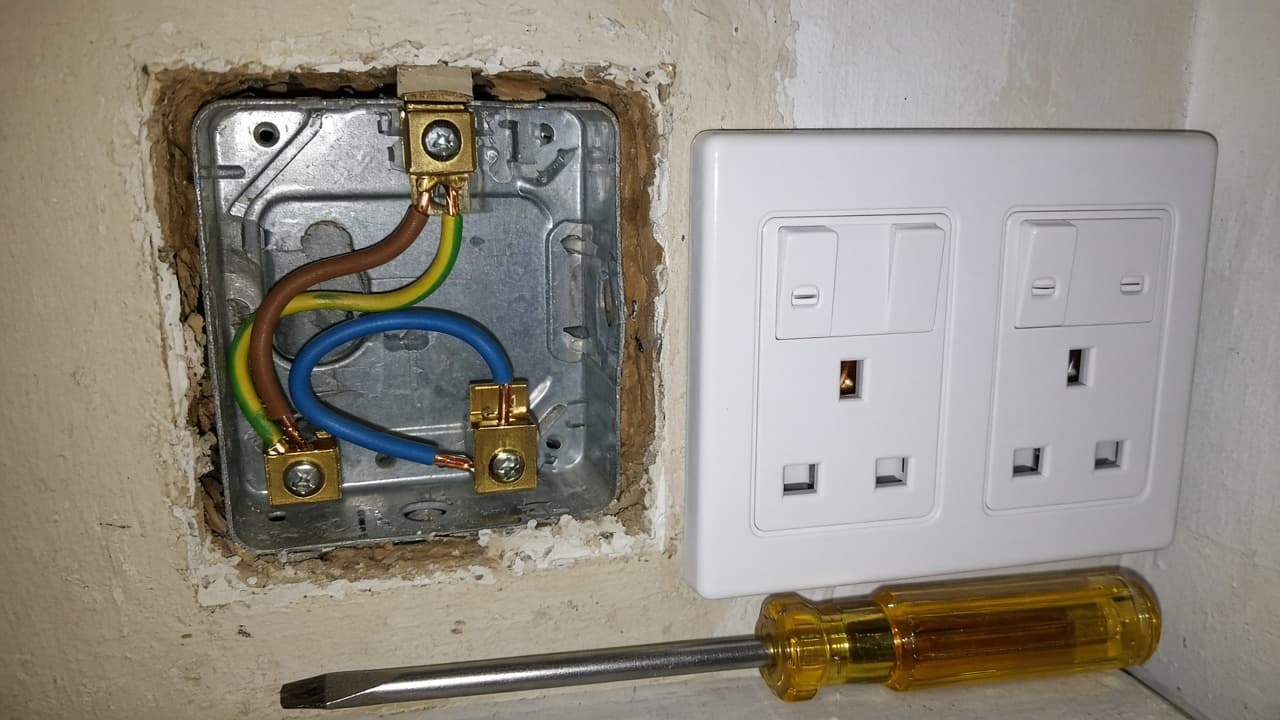
Tools
- Insulated screwdriver set
- Voltage tester / proving unit (as your tester requires)
- Phone camera for terminal photos
- Torch
- Matching single or double socket faceplate
- Soft brush for dust in the back box
A cracked or scorched socket front is a common weekend fix when you are only changing the faceplate. The back box stays put. The cables stay in the same terminals. You are not moving the socket, adding a spur, or turning a single into a double with new cable. Those are different jobs and usually electrician territory.
Check scope first: what electrical work can you DIY in the UK and Part P explained for homeowners. Lighting plate swaps live in how to replace a light switch like-for-like and how to replace a two-way light switch like-for-like.
Faceplate only: what this job is not
This guide stops at the accessory on the wall. It does not cover:
- Relocating a socket higher or lower
- Adding a new socket or fused spur
- Changing a single socket into a double by altering wiring capacity or box size without a proper design
- Any work inside the consumer unit beyond switching the circuit off
If the back box is broken, floating in plasterboard, or packed with more conductors than a standard faceplate can terminate cleanly, refit what you can and call an electrician.
Match the accessory before you isolate
| Check | Pass means |
|---|---|
| Single vs double | New plate matches the old footprint |
| Switched vs unswitched | Same function unless you knowingly buy the same wiring layout |
| Metal vs plastic | Metal plates need a proper earth to the plate |
| USB / smart extras | Only if the product is a true faceplate replacement on the same supply and you follow its instructions without changing the circuit |
On a ring final you will often find two cables (sometimes more) in the box, with lives doubled into the live terminal, neutrals into neutral, earths into earth. Photograph that clearly. A radial may look simpler. Either way, conductor count into each terminal on the new plate must match what you removed.
Isolation and proving dead
Socket circuits are not made safe by unplugging appliances. Isolate at the consumer unit.
- Find the socket circuit breaker or fuse (often labelled “sockets”, “ring”, or a room name). If labels are wrong or missing, you may need careful breaker tests with a lamp in the socket, then leave that breaker off.
- Switch that breaker OFF (or remove that fuse). Do not remove covers from the consumer unit or work on busbars.
- Leave a note on the consumer unit door.
- Prove the socket terminals dead with your tester before you disconnect conductors.
- If you cannot prove dead, stop.
Step-by-step
1. Unplug everything and open the plate
Unplug all loads. Undo the faceplate screws. Draw the plate forward so you can see the terminals without straining the cables. Dust and old plaster often hide a third earth tail; use the torch.
2. Photograph live, neutral, and earth
Capture every conductor into L, N, and E (or the equivalent markings). Note doubled conductors sharing a terminal. On older cable you may see red (live), black (neutral), green (earth). On newer cable: brown, blue, green-and-yellow. Do not assume; use the photos.
3. Compare, then transfer
Offer up the new faceplate. Terminal layout must accept the same grouping. Transfer one terminal group at a time: all lives to live, all neutrals to neutral, all earths to earth (including a flying earth to a metal plate where required). Tighten so conductors cannot pull free, without cutting strands. Insulation should reach the terminal body.
4. Refit flush and test
Ease cables back without sharp bends against the box edge. A common scar on this job: nipping the earth under the faceplate edge when the box is shallow. Seat the plate flat, restore the breaker, and test with a simple appliance or plug-in tester. Warmth, buzzing, or an immediate trip means isolate again and call an electrician. Do not keep resetting.
Mistakes that show up as heat or trips
- Leaving one ring conductor out of a doubled live or neutral terminal.
- Mixing a live into a neutral terminal because colours were ambiguous and photos were skipped.
- Fitting a metal plate without earthing the plate.
- Forcing a double faceplate onto a box that cannot take the cable volume safely.
- Treating a burnt, soot-stained terminal as cosmetic and reusing damaged cable ends.
When to call an electrician
Call a registered electrician if terminals are burnt, if cables are brittle, if the breaker or RCD will not hold, if the back box moves in the wall, if conductor count does not match a clean like-for-like map, or if you wanted the socket in a new position. Adding sockets and most circuit alterations sit outside this page; see what electrical work can you DIY in the UK and Part P explained for homeowners.
FAQ
Can I replace a socket faceplate myself in the UK?
Often yes for a like-for-like faceplate on the same back box, if you isolate at the consumer unit, prove dead, and copy the terminal map from photos. Moving or adding sockets is a different matter. Read Part P explained for homeowners for the notification framing.
How many wires should be in a socket back box?
There is no single number. A ring final commonly presents two cables (six conductors plus any flying earths), but layouts vary. What matters is that every conductor lands back on the correct terminal group exactly as photographed.
Can I change a single socket to a double myself?
Not under this faceplate-only guide. A genuine single-to-double conversion can involve box size, cable capacity, and circuit design. Treat it as electrician scope unless you already have a suitable dual box and a competent assessment that stays within regulations.
Why did the RCD trip when I turned the power back on?
A loose strand touching earth, a pinched cable, or a wiring error can do it. Isolate, do not keep resetting, and get a registered electrician if the fault is not an obvious, cold, correctable mistake matching your photos.
10 comments