How to Replace a Downpipe
2 September 2026 Joe HartleyIntermediate2–4 hours20 comments
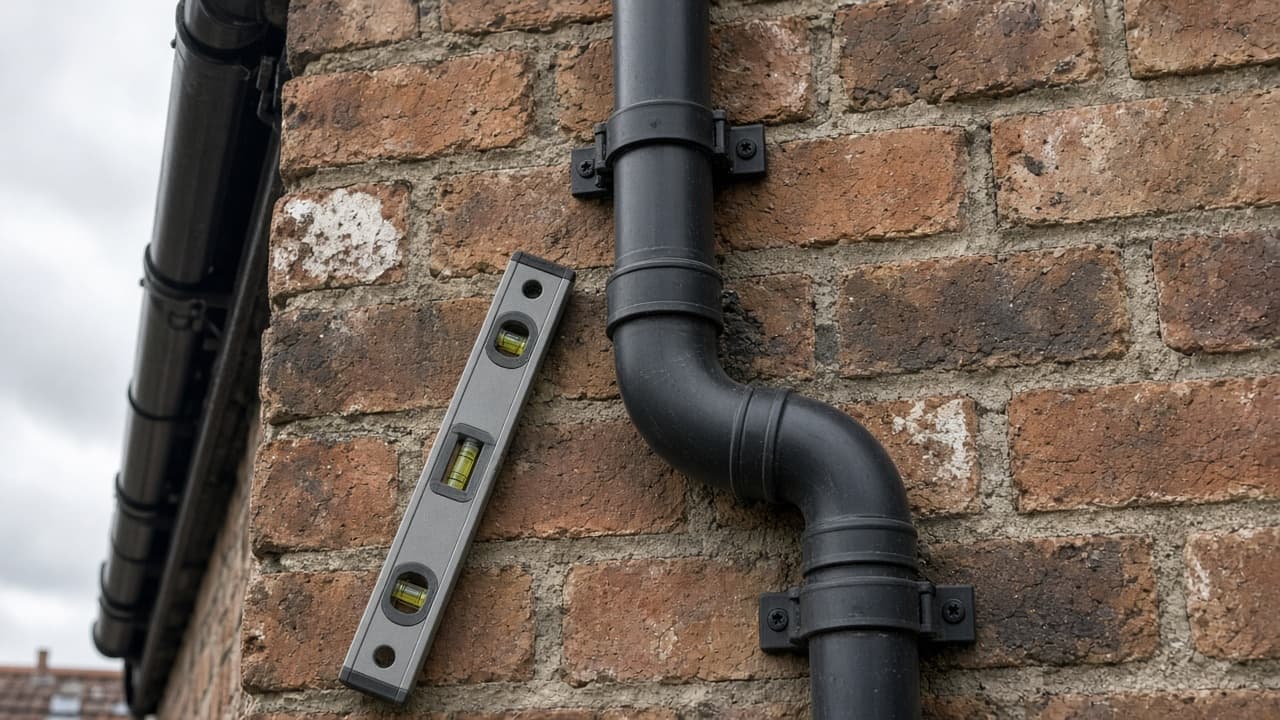
Tools
- Stable ladder and a person to foot it
- Tape measure and marker
- Fine-tooth saw or PVC pipe cutter
- Screwdriver / drill-driver for pipe clips
- Wall plugs and screws suited to the wall
- Replacement downpipe, sockets, offsets, and shoe
- Spirit level
- Gloves and eye protection
A downpipe that splits, pulls out of its socket, or stains the render on every wet day is due for replacement. Most UK houses use 68 mm round or 65 mm square PVCu pipe from the gutter outlet down to a shoe above a gully. The job is measuring, dry-joint sockets, and clips. It is also ladder time: if you cannot work the full height in short, stable pitches with help footing the ladder, hire access rather than chaining steps on soft ground.
Before you buy pipe
| Decision | Detail |
|---|---|
| Round vs square | Match the outlet spigot on the gutter; adapters exist but add joints |
| Colour | Black, white, brown, anthracite; batch-match if a short patch will show |
| Offsets | Two bends (or a moulded offset) to step from fascia to wall line |
| Shoe vs into underground | Shoe over a gully is common; sealed into underground drain may need a different connector |
Measure overall drop, then the offset depth from the back of the gutter outlet to the wall face. That offset length is what people forget in the store, then discover on the ladder that a straight pipe cannot reach the clips.
Clear the gutter and confirm the outlet itself is not the blockage before you strip the pipe: clear guttering. Joint drips on the horizontal run are a gutter joint job.
Removal and refit
1. Plan clips and ladder pitches
Mark existing clip positions. You want support near the outlet, near each socket, and above the shoe, without a long unsupported whip in the wind. Work from the bottom up for removal if sections will lift out of sockets; keep the ladder moved under the work, not stretched sideways.
2. Free the old pipe
Undo clips. Twist and lift sockets apart; old paint may glue them. If a branch hopper or water-butt diverter is fitted, remove that as a unit and decide whether to refit it on the new pipe. Take care around render; rusted screw heads shear and leave stubs that need plugging later.
3. Dry-assemble on the ground
Cut pipe square. Deburr the outside of the spigot so it does not roll the seal in a ring seal socket. Assemble outlet spigot (or short stub), offsets, main lengths, and shoe in order. Socket mouths usually face up so each joint sheds water into the pipe, not into the wall.
4. Offer up and fix clips
Start at the gutter outlet so the top joint is fully home. Fix clips to sound substrate (brick with wall plugs, not crumbling mortar only). Keep the pipe close enough to the wall that wind cannot lever sockets apart, but leave the tiny expansion gap the maker shows at ring-seal joints if specified.
5. Aim the shoe
The shoe should throw water into the centre of the gully grate, not onto the paving beside it where it splashes the wall. A slight twist in a solvent-free clip system is adjustable; do not force a cracked bend to aim.
6. Hose test from the gutter
Run water into the outlet. Watch every socket and the wall behind. A weep at a joint usually means the spigot is not fully in or the seal was rolled. A wet wall with dry joints points back to the gutter overflow or a cracked hopper above.
Job-specific detail: The top offset pair is where DIY downpipes look drunk. Set the upper bend so the pipe meets the wall plumb before you tighten mid-height clips. Clipping a crooked pipe “tight to the wall” just opens the outlet joint every time the plastic warms in the sun.
Common mistakes
- Buying pipe without offsets, then kicking the bottom out to meet the gully.
- Solvent-welding a system designed for dry ring seals (or the reverse).
- Reusing shattered clips that no longer grip.
- Standing on the gutter to reach the outlet spigot.
- Leaving the shoe aimed at the house wall so splashback recreates the damp you tried to fix.
When to call a pro
Stop at three-storey drops, fragile roofs, shared rainwater stacks, or cast-iron systems with leaded joints. Call a builder or gutter specialist if the gully is broken below ground, if you must open foul drains, or if access needs scaffolding. Same-cluster help: clear guttering, replace a gutter joint, and fix a leaking gutter.
FAQ
What size downpipe do I need for a UK house?
Most domestic plastic systems use 68 mm round or a matching square profile tied to the gutter outlet. Match what is on the outlet spigot rather than guessing from the old pipe alone if adapters are present. Larger commercial sizes appear on big roofs and need matching gutters.
Do plastic downpipe joints need glue?
Many UK PVCu rainwater systems push together with ring seals and are left dry so they can expand. Some solvent-weld waste pipes look similar but are the wrong product. Use rainwater pipe and the joint method on the pack.
Can I replace only the cracked section?
Yes, if you can cut out the damage and reinstate with a socket and clips so both new joints are supported. Long brittle runs sometimes keep cracking next to a short patch; replacing the full drop is cleaner when the plastic has gone chalky from top to shoe.
20 comments