How to Build a Garden Shed
29 July 2026 Joe HartleyAdvanced2–3 weekends15 comments
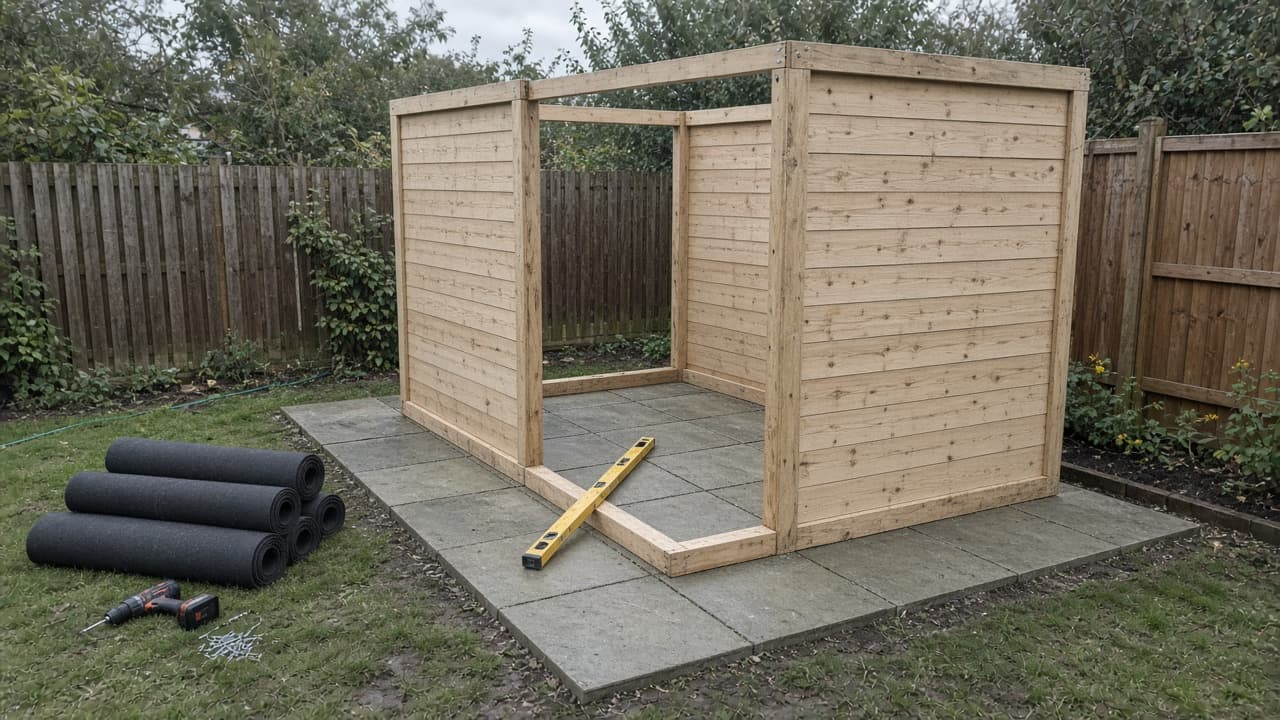
Tools
- Spirit level and tape measure
- Drill/driver
- Square
- Step ladder (stable footing)
- Saw (for base or trimming as needed)
- Staple gun or hammer (felt stage)
Building a garden shed is a sequence of jobs, not one afternoon URL. A racked base makes sticky doors. A square shell with no felt soaks the roof boards overnight. Treat this page as the project map: finish each stage properly, then follow the dedicated guide for that stage.
Before you order a kit, check permitted development rules for outbuildings on your plot and keep height and position within local limits. Neighbour boundaries and easements matter as much as the timber list.
The build order that actually works
| Stage | What “done” looks like | Guide |
|---|---|---|
| 1. Base | Level, square, drained away from the door, timber clear of soil | Build a garden shed base |
| 2. Assemble | Floor, walls, and roof structure up, braced, diagonals true | Assemble a shed |
| 3. Felt | Roof weatherproof with correct overlaps and drip edges | Felt a shed roof |
| 4. Openings | Windows and door hung, closing on a square opening | Fit shed windows and doors |
| 5. Finish | Cladding treated or painted so water cannot soak end grain | Treat and paint a shed |
| 6. Secure | Hasp, hinges, and fixings that slow theft | Secure a shed against theft |
If the felt later fails, renew it with replace shed roof felt rather than patching forever.
Base first (do not skip)
Soft ground racks the frame and the door binds within months. Common UK options:
- Concrete slab with a slight fall away from the door for permanence.
- Paving slabs on compacted hardcore, checked level in both directions and on the diagonals.
- Timber bearers on slabs: pressure-treated timber kept off soil, with airflow underneath.
Measure diagonals on the base before a single wall panel goes up. A base that is “nearly” square shows up as a door that scrapes at the top latch corner.
Shell, roof, then weatherproof
Assemble on a dry, calm day if you can. Featherboard panels sail in wind, and felt hates rain. Floor first, then walls, then roof boards or sheets, then felt. Do not hang the door and walk away before the roof is covered: overnight rain swells boards and locks damp into the structure.
Leave eaves overhang so rain clears the cladding. Overlap felt with lower courses first so water sheds, not climbs under the laps. Detail lives in the assemble and felt guides above, not in a shortened checklist here.
Openings, finish, and security
Fit windows and the door once the shell stands square and the roof is weatherproof (or at least temporarily covered). Check the door clears the threshold with winter swell in mind: a tight summer fit becomes a stuck winter door.
Treat or paint soon after assembly so cut ends and bare timber do not sit through a wet week. Then fit serious hinges and a hasp that cannot be popped with a screwdriver. Electrics into a shed are a separate Part P path, not a DIY add-on in this series.
Project mistakes that cost a rebuild
- Starting panels on a base that fails a diagonal check. The door never sits right.
- Felting in the wrong order (upper course under a lower one). Water tracks in at the lap.
- Leaving the roof bare overnight “because it looks fine.” Boards cup and fasteners pull.
- Painting only the pretty faces and skipping end grain, bearers, and the bottom of cladding.
- Fitting a padlock on cheap screws into thin cladding with no backing.
When to call a pro
Call a builder or experienced shed installer if the ground needs proper excavation and drainage you are not set up for, the kit arrives incomplete and out of square, roof work at eaves height feels unsafe, or you want mains power and lighting in the shed. Mains electrics need a Part P route, not improvisation with an extension lead through a window.
FAQ
Can I build a shed in one weekend?
A small panel kit on a finished base can go up in a long day with two people, but the base, felt, finish, and security usually need more than one weekend. Count the base as its own job.
Do I need planning permission?
Many modest sheds fall under permitted development, but height, position, listed buildings, and local rules vary. Check before you dig. This guide is not planning advice for your plot.
Should I buy a kit or build from scratch?
Kits are faster for most DIY builds and come with matched panels. Scratch-built sheds suit odd sizes and strong carpentry. Either way, the base and weatherproofing sequence stay the same.
Why does my shed door stick after a wet month?
Usually the base or shell is out of square, or the door was hung tight in dry weather without allowance for swell. Check diagonals and the roof for leaks before you plane the door repeatedly.
15 comments