How to Replace Shed Roof Felt
1 July 2026 Joe HartleyIntermediateHalf a day to 1 day9 comments
Tools
- Pry bar and claw hammer
- Stiff scraper
- Sharp knife
- New mineral roofing felt and clout nails
- Replacement roof boards (if rotten)
- Stable step ladder
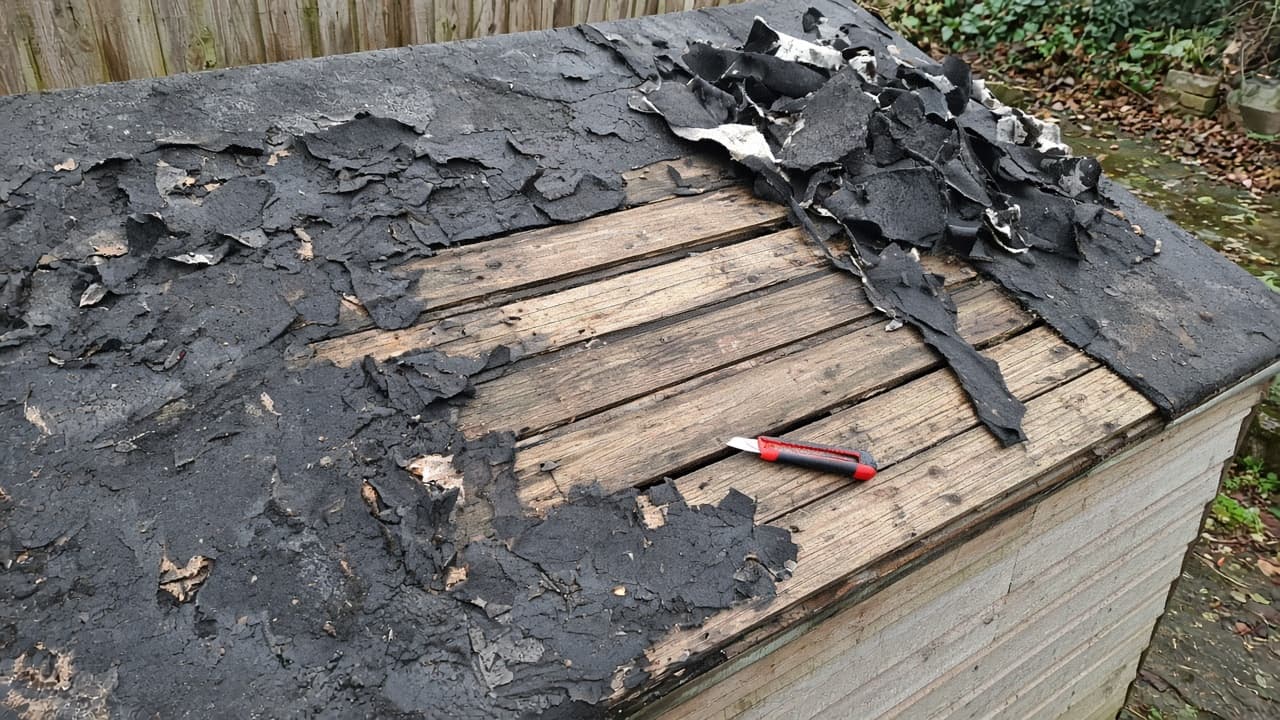
Old shed felt goes brittle, splits at the ridge, and lifts at the eaves until every shower drips onto tools below. Replacing shed roof felt only works if you strip the old layer cleanly and fix soft boards before you trap damp under a shiny new skin.
New-build felting on fresh boards: how to felt a shed roof. Project hub: how to build a garden shed. If walls are still going up, finish assembly first.
Is it a felt job or a timber job?
| Symptom | Likely cause | Action |
|---|---|---|
| Cracks, bald mineral, lifted eaves | Age and wind | Strip and refelt |
| Soft spots underfoot, dark boards | Rot from long leaks | Replace boards, then felt |
| Sag between purlins | Undersized or failed boarding | Add support or new sheets before felt |
| Leak only at a window head | Flashing / bead failure | Sort glazing detail; see windows guide |
| Green slime, moss held water | Poor fall / debris | Clean, strip, improve drip edges |
Press a screwdriver into suspect boards. If it sinks easily, cut out and replace that section with matching thickness board. Felting over cardboard-soft OSB wastes a weekend.
Ladder and height: Stripping felt means leverage and sudden tears. Keep the ladder footed, work one section at a time, and do not stand on boards you have just found to be rotten. Wear gloves; old felt and rusty clouts cut. If the roof feels unsafe, stop and get a carpenter rather than improvising from a wobbly perch.
No torch-on work and no electrical steps here.
Strip and replace kit
| Item | Notes |
|---|---|
| Pry bar / claw hammer | Lift clouts; avoid splintering sound boards |
| Scraper | Bitumen residue left in thick ridges will telegraph through new felt |
| Bin bags / hire bag | Old felt is heavy and messy |
| New mineral felt | Same or better grade than the original |
| Clout nails | Fresh galvanised; do not reuse bent rusty nails |
| Preservative | Brush on any bare replacement timber ends |
Step-by-step
1. Clear the roof and strip the old felt
Empty shelves under the work area if drips or debris will fall inside. Starting at a verge or ridge, prise up the old felt and pull clout nails as you go. Work in calm weather; half-stripped roofs hate wind. Bag the waste as you strip so it does not blow around the garden.
2. Inspect and repair the deck
With the boards bare, look for dark staining, sprung joints, and nail holes clustered into broken edges. Replace rotten boards. Punch remaining nail stubs flush or remove them. Sweep grit off; grit under new felt wears holes from the underside. If purlins are rotten where they meet the walls, fix those before you close the roof again.
3. Let wet timber dry (or swap it)
If boards are damp but sound, give them a dry day or two with the roof open under a temporary tarp that still vents. Do not seal soaking timber under new felt. Boards that stay dark and soft after drying need replacing, not wishing.
4. Refelt as on a new roof
Lay new mineral felt from the eaves upward with proper overlaps, tight nailing at edges, and a proper ridge cover. Sequence and overlaps match the new-roof guide: how to felt a shed roof. Turn down eaves and verges cleanly. Refit ridge rails or barge details that came off during stripping.
5. Check inside after the first rain
Look for dark lines at board joints and drips at the ridge. Small misses are easier to lift and re-nail in the first week than after the felt hardens into shape.
Mistakes that bring the leak back
- Nailing new felt straight over old felt “as a second skin”. You double the weight, hide rot, and create air pockets that flap.
- Leaving a forest of old clouts proud so they spear the new layer from below.
- Refelting while the boards are still wet from the last storm.
- Skipping the ridge strip because the old one had vanished years ago.
When to call a carpenter
Call help if more than a board or two is rotten, if the roof structure has spread, or if the shed has racked so the ridge is twisted. A full re-board plus felt on a tall building may need scaffold. Soft corners in the walls often mean a bigger repair than a felt renew. Floor leaks after roof work can point lower down: build a garden shed base.
Related: felt a shed roof, fit shed windows and doors, build a garden shed, build a garden shed base.
FAQ
Can I put new shed felt over old felt?
It is a poor fix. Strip the old layer so you can see the boards and nail into solid timber. Overfelting hides rot and rarely sits flat.
How often should shed roof felt be replaced?
In UK weather, budget for inspection every few years and replacement when cracks, bald patches, or lifted edges appear. Cheap felt on a south-facing roof can fail in under a decade; heavier felt lasts longer if nailed well.
Why does my shed still leak after new felt?
Usually a missed overlap, a punctured board edge, a ridge without a proper cap, or water entering at a window or door head rather than through the field of the roof. Check those junctions next.
9 comments