How to Use a Mitre Saw Safely
3 July 2026 Joe HartleyIntermediate20–40 minutes setup and practice19 comments
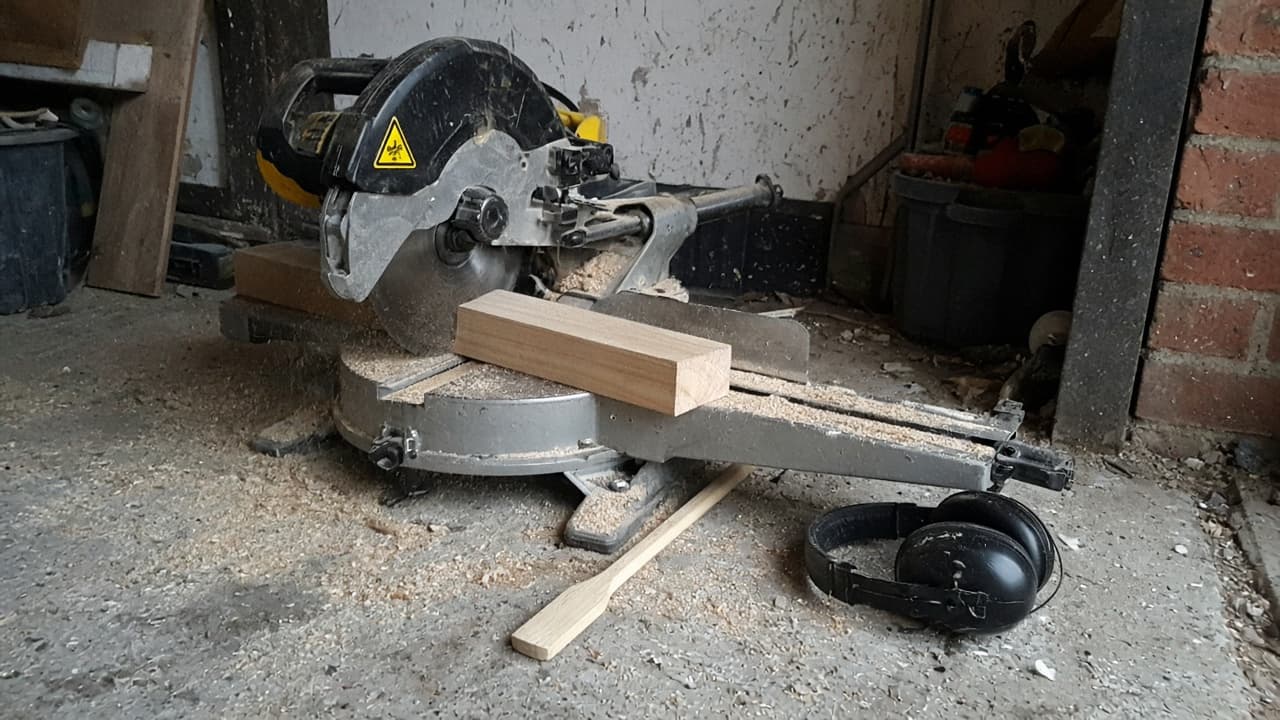
Tools
- Mitre saw (chop or sliding)
- Sharp crosscut blade
- Eye and hearing protection
- Dust extraction or mask
- Clamps or hold-downs
- Support stands or saw horses
A mitre saw cuts clean cross-cuts and angles in skirting, architrave, and stud timber. It also throws workpieces hard if the wood lifts, twists, or pinches the blade. Most DIY injuries and scares come from freehand cuts, short offcuts held by hand next to the blade, or lifting the head while the disc is still spinning.
PPE and a clear run-off zone
Wear safety glasses (or a face shield) and hearing protection every time the saw runs. Softwood dust adds up indoors; use extraction if you have it, or a decent dust mask.
Clear the bench of offcuts. Keep bystanders and pets out of the line of fire behind and beside the saw. Tie back loose sleeves and remove dangling jewellery.
Kickback: what starts it
Kickback happens when the blade binds and the motor drives the timber (or the saw head) instead of cutting freely. Common DIY triggers:
- Workpiece not tight to the fence for the full cut
- Cutting without the timber flat on the table
- Releasing a bent or cupped board that closes on the blade
- Cross-cutting round stock that rotates
- Forcing a dull blade through thick softwood
Support long skirtings so the free end does not drop mid-cut. Clamp short pieces; fingers never share the blade’s path.
Step-by-step
1. Site the saw and support the timber
Place the saw on a stable stand or bench at a comfortable height. Set roller stands or saw horses level with the table for long lengths. An unsupported tail lifts the kerf and invites bind.
2. Fit a sharp blade and check guards
Unplug before changing blades. Fit the correct crosscut or combination blade for the work. Confirm the guard moves freely and returns over the teeth. Do not tape or wedge guards open.
3. Set the angle and hold to the fence
Dial the mitre (and bevel, if needed) and lock it. Mark the cut on the waste side. Hold or clamp the workpiece firmly against the fence and flat on the table. For repeat trim lengths, use a stop block on the fence, not a freehand guess.
4. Spin up, cut, then wait
Start the saw and let it reach full speed before you lower into the wood. Feed smoothly. On a sliding saw, pull the head out, drop into the timber, then push through (follow your model’s manual; do not climb-cut against the blade’s preference). When the cut finishes, keep the head down until the blade stops turning, then raise it. Unplug when you walk away.
5. Clear scrap with the power off
Brush or vacuum offcuts. Never reach under a coasting blade to flick a splinter clear.
Mistakes that end in A&E or a ruined length
- Holding a tiny offcut by hand beside the blade instead of a clamp or sacrificial push block.
- Cutting freehand in mid-air “just for a quick trim”.
- Lifting the head while the blade still spins so teeth snag the kerf.
- Cutting metal or masonry with a wood blade.
- Working tired, rushed, or on an unstable folding table that walks across the garage floor.
When to hire a different tool (or a joiner)
Use a circular saw with a guide for sheet goods and long rips. A multi-tool still wins for flush and plunge cuts the mitre saw cannot reach. Call a joiner for structural framing you are not confident specifying, or if the saw itself is damaged (cracked fence, sticking guard, scorched motor).
Related: how to use a multi-tool for DIY for flush work in situ, how to use a spirit level properly before you mark skirting runs, and how to drill ceramic tiles without cracking when trim work turns into wall fixings.
FAQ
What PPE do I need for a mitre saw?
As a minimum: eye protection and hearing protection. Add a dust mask or extraction for indoor softwood and MDF. Gloves are debated; many users skip close-fitting gloves near spinning blades because fabric can catch. Keep hands clear instead.
What causes mitre saw kickback?
Binding. The timber must stay flat to the table and tight to the fence. Support long stock, clamp short pieces, and do not force a dull blade. Wait for the blade to stop before raising the head.
Can beginners use a sliding mitre saw?
Yes, with slow practice on scrap, full PPE, and no freehand cuts. Learn a simple 90° cross-cut against the fence before you chase compound bevels on expensive architrave.
19 comments