How to Fix a Sticking Door
4 September 2026 Joe HartleyBeginner45–90 minutes15 comments
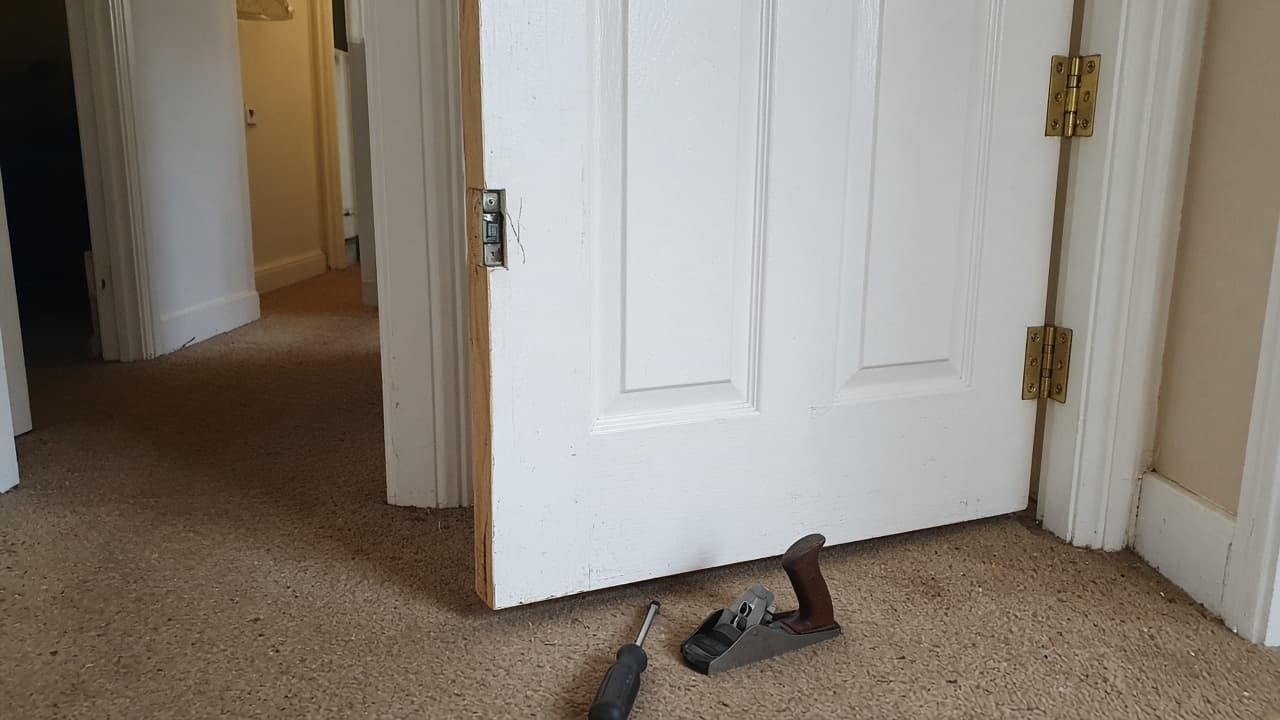
Tools
- Screwdrivers
- Plane or sanding block
- Spirit level
- Wood shims or thin cardboard
- Pencil
- Longer hinge screws (40–50 mm) if the door has dropped
A door that scrapes the carpet or refuses to latch is usually swollen timber, loose hinges, or a frame that has moved. Mark where it rubs before you plane large amounts of wood off. Most sticking doors need a small adjustment, not a reshaping.
When the diagnosis points to timber removal, follow how to plane a door that sticks. If the door was never hung true, you may need how to hang an internal door or how to hang a new door in an old frame instead of chasing the edge forever.
Diagnose before you cut
Close the door slowly. Rub a pencil along the rubbing face, or watch the gap against the lining. Common patterns:
| Rub or fault | Likely cause | First move |
|---|---|---|
| Latch edge at top or bottom | Swollen door or out of square | Ease a thin shaving; check hinges are tight |
| Hinge edge binds | Hinges proud, screws loose, or mortice too shallow | Tighten, deepen mortice slightly, or reset hinges |
| Scrapes across new carpet | Door dropped, or pile too thick under the leaf | Longer top-hinge screws; undercut only if needed |
| Latch hits the keep but will not click | Strike plate misaligned | Nudge the keep; check the door has not dropped |
| Latch catches on deep carpet pile near the floor | Pile height at the latch stile | Trim pile carefully or undercut the door bottom last |
Seasonal swelling after a wet winter is common on unsealed edges. If the door only sticks on damp days, remove less timber than you think and seal the fresh edge so it does not drink moisture again.
Tools and materials
| Item | Notes |
|---|---|
| Screwdrivers | Phillips and slotted for hinge and keep screws |
| 40–50 mm screws | Replace short hinge screws in the frame so they bite the stud behind the lining |
| Plane or coarse sanding block | Take off thin passes; rehang and test often |
| Cardboard or veneer shims | Pack behind a hinge leaf to pull the door into the frame |
| Paint or varnish | Seal any freshly cut edge the same day |
Fixes in order
1. Tighten and reset hinges
Open the door and check every hinge screw. Short screws in the lining often only grip the thin timber of the frame. Drive longer screws through the top hinge into the stud behind: that single change often lifts a dropped door enough to clear the carpet and catch the latch.
2. Pack or deepen a hinge
If the door binds on the latch side with a tight hinge-side gap, packing the hinge leaf with thin cardboard can pull the door back into the frame. If it binds on the hinge side, deepen the hinge mortice a fraction with a sharp chisel so the leaf sits flush.
3. Ease the rubbing edge
Where timber has swollen, remove a thin shaving with a plane or coarse sandpaper. Work gradually, rehang, and test. Do not chase a perfect reveal in one pass. Seal the cut edge before the next damp spell. Full planing sequence: plane a door that sticks.
4. Adjust the keep
If the latch hits the plate but will not engage, loosen the keep screws and nudge it until the latch clicks, then retighten. Carpet pile catching under the latch stile can feel like a lock fault when the mechanism is fine.
5. Know when hanging is the real job
A twisted lining, a door cut badly undersize, or hinges in the wrong place will not be cured by planing the latch edge thinner every winter. Step back to a proper hang: hang an internal door or hang a new door in an old frame. Related hinge work: fit door hinges correctly.
Mistakes that make sticking worse
- Planing a wide strip off the latch edge before checking hinge screws. You then have a permanent gap when the timber shrinks in summer.
- Leaving a freshly planed edge raw. It swells again within a season.
- Forcing a fire door. Certified fire doors need the right clearances and hardware; do not plane them casually.
- Undercutting for carpet before trying longer top-hinge screws. You cannot put the timber back.
When to call a joiner
Stop and call a joiner if the frame is badly twisted, the door is a fire door and you are unsure about certification limits, the lining is rotten, or repeated easing still leaves the latch unreliable. A new door in a distorted opening is often cheaper than fighting the old leaf every winter.
FAQ
Should I plane the door or lift it on the hinges first?
Try hinges first. Tightening and longer screws into the stud behind the top hinge fix many “carpet scrape” doors without removing timber. Plane only where pencil marks show a true rub after the hinges are sound.
Why does the door stick only in winter?
Timber takes up moisture. Unsealed edges and humid hallways make the leaf grow into the lining. Ease a little, seal the edge, and improve ventilation if the hallway runs damp.
Can I sand instead of using a plane?
Yes for small high spots. Use a coarse block, keep the face square, and stop often to test. A plane is faster for a long, even rub along the latch edge.
The latch will not catch but the door closes. What now?
Usually the keep is a millimetre out, or the door has dropped so the latch tongue hits the plate low. Adjust the keep, then check hinge screws before you chisel the latch mortice deeper.
15 comments