How to Hang a Door on Existing Hinges
7 July 2026 Joe HartleyBeginner1–2 hours9 comments
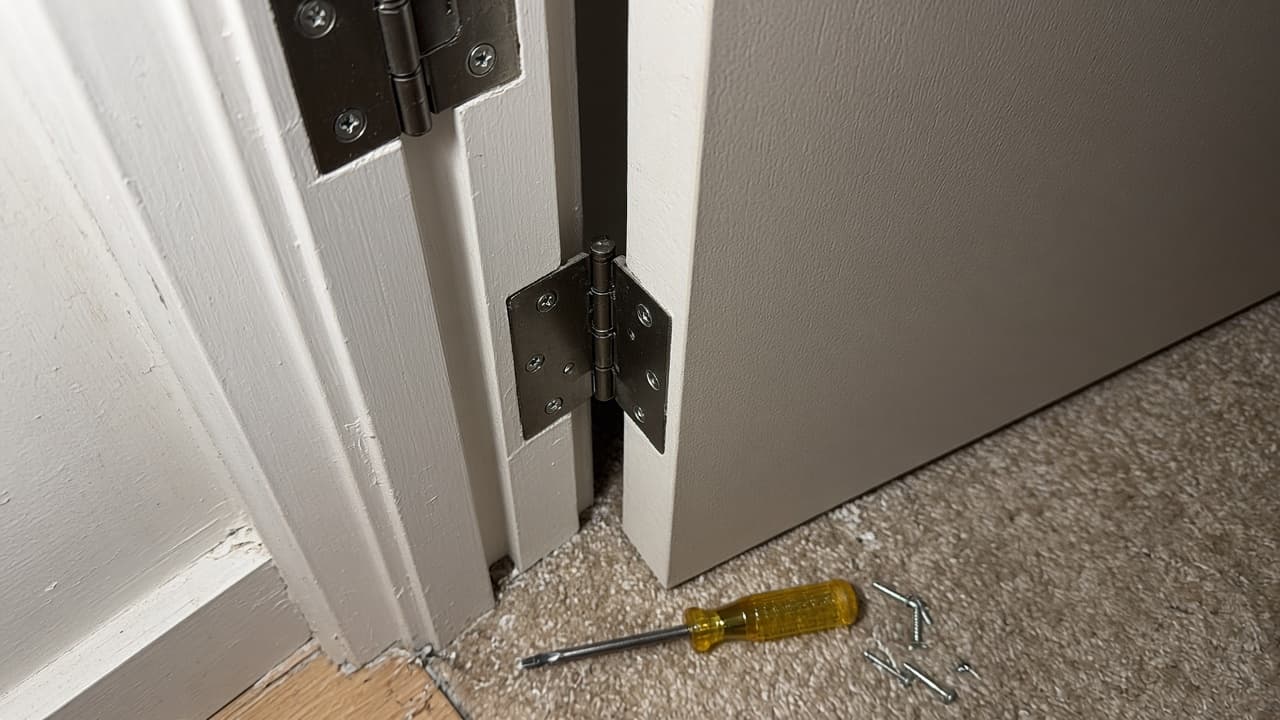
Tools
- Screwdrivers
- Chisel
- Tape and pencil
- Plane or sandpaper
- Door wedges
Hanging a door on existing hinges is the usual bedroom or cupboard swap: the lining stays, the leaf changes. Match the hinge positions and knuckle direction and you avoid chiselling a fresh jamb. Miss the recess depth and the door will sit proud or bind.
For a full hang with new hinges on door and frame, use how to hang an internal door. If the old frame is twisted, jump to how to hang a new door in an old frame.
When this shortcut works
| Check | Pass? |
|---|---|
| Hinge leaves on the jamb are sound and square | Yes: continue |
| Screws in the jamb are stripped or hinges bent | No: renew hinges (fit door hinges correctly) |
| New door thickness matches old (often 35 mm or 40 mm) | Yes: recesses transfer cleanly |
| New door much thicker or thinner | Recess depth and stop position need rethink |
Keep the hinge knuckles the same way round as before (usually towards the door stop side). Rising butts have a handed lift; see how to fit rising butt hinges.
What you will need
| Item | Notes |
|---|---|
| Replacement door | Height and width close to the old leaf |
| Matching hinge size | 75 mm or 100 mm butts to suit jamb recesses |
| Sharp chisel | Clean new recesses in the door edge |
| Wedges | Support while you offer the leaf |
Step-by-step
1. Remove the old door
Support the leaf, knock out hinge pins if loose-pin butts, or unscrew the door-side leaves. Keep the jamb leaves in place if they are reusable. Label top hinge if sizes differ.
2. Transfer hinge positions to the new door
Stand the new door on wedges in the opening (or lay the old door on the new one as a template). Mark top and bottom hinge outlines from the jamb leaves. Score with a knife before chiselling so veneers do not spelch.
3. Cut door-side recesses
Chop to the hinge leaf thickness so the hinge sits flush. Offer each hinge into its recess before screwing. Pilot every hole.
4. Hang and test swing
Screw door-side leaves to the door, lift onto jamb leaves, and insert pins or screw through. Open and close slowly. Rub marks mean hinge packing or a light plane on the high spot before you take heavy shavings.
5. Refit latch and handles
Transfer latch height from the old door or from the existing strike. A new latch height means a new strike recess. Check the latch clicks without slamming.
Mistakes that waste a new door
- Chiselling recesses from memory instead of marking off the jamb.
- Mixing hinge brands so knuckle diameters will not pin together.
- Planing the latch edge before checking hinge screws have not backed out.
- Forgetting carpet clearance when the old door was already cut short.
When to call a joiner
Stop if the jamb recesses are chewed beyond packing, if you need a fire-rated leaf in a certified frame, or if shortening the door means cutting through a glazed aperture you cannot restyle safely. Budget context: cost to hang an internal door DIY vs joiner.
Same cluster: how to cut a door to size if the leaf is tall, how to plane a door that sticks for fine rubs after hanging, and how to fix a sticking door if an old leaf is the problem rather than a swap.
FAQ
Can I hang a new door on the old hinges?
Yes if the jamb leaves are sound, flat, and the same size as the new door-side leaves. Cut matching recesses in the new leaf, hang on wedges, then refit the latch to the existing strike where the height still matches.
Can I reuse the old hinge screws?
Only if they bite. Stripped lining holes need longer screws into solid timber or a glued dowel repair before you trust the leaf.
Why does the new door sit forward of the old one?
Recesses too shallow or hinges not fully seated. Or the new door is thicker than the old stop allows.
9 comments