How to Fit Underlay for Laminate
15 June 2026 Joe HartleyBeginner1–3 hours20 comments
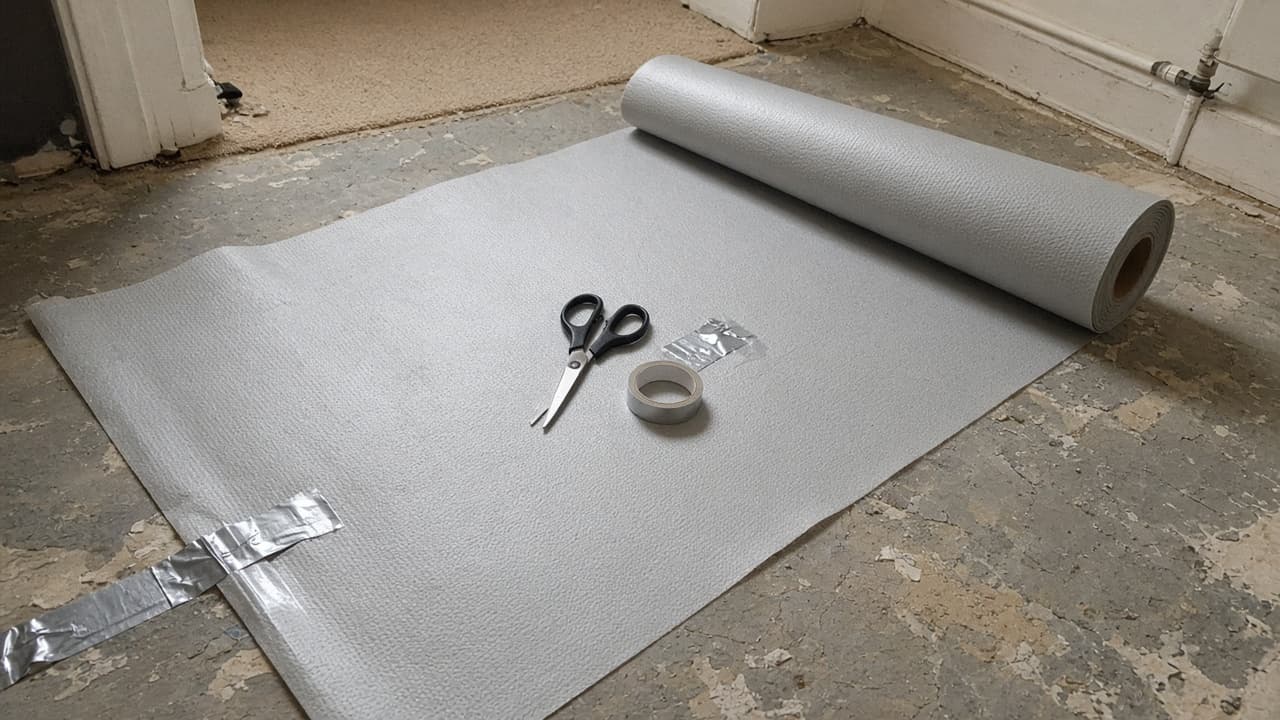
Tools
- Tape measure
- Utility knife and straight edge
- Scissors (for some tapes)
- Cloth tape as specified
- Broom and vacuum
Underlay is the quiet layer under laminate: it softens footfall, takes out minor roughness, and on concrete it often carries the vapour barrier. Fitting it well is straightforward. Wrinkles, overlaps, and dirty seams are what you hear later as soft clicks.
Choosing foam, rubber, or combined DPM products: how to choose laminate underlay UK. After underlay is down, continue with how to lay laminate flooring.
Match underlay to the subfloor
| Subfloor | Typical underlay approach |
|---|---|
| Concrete / screed (ground floor) | Combined vapour-barrier underlay, or polythene DPM plus standard underlay |
| Upper-floor screed | Often standard foam if the structure is dry; check the pack |
| Floorboards or plywood overlay | Acoustic foam or recycled rubber; keep thickness even |
| Over existing hard flooring | Only if flat, sound, and allowed by both underlay and laminate makers |
If the laminate pack specifies a maximum underlay thickness (often around 2–3 mm for some click systems), do not stack leftover carpet underlay “for comfort”. Thick squashy layers let joints flex and fail.
What you will need
| Item | Notes |
|---|---|
| Underlay rolls | Buy a little extra; doorways and mistakes eat metreage |
| Joint tape | Use the tape the underlay brand recommends for foil or film faces |
| Utility knife | Fresh blade; dull blades tear film |
| Clean, dry floor | Vacuum after sweeping; grit becomes permanent lumps |
Concrete damp control context: how to lay laminate on concrete. Timber prep: how to lay laminate on floorboards.
Step-by-step
1. Prep the base
The floor under the underlay must be clean, dry, and broadly flat. Scrape blobs of plaster. Vacuum. Fix squeaks and loose boards before you cover them. Underlay is not a structural fix.
2. Work out the run direction
Roll underlay so joins run across the planned plank direction when you can. That way laminate bridges underlay seams. Start along the longest straight wall. Leave the laminate’s 10–12 mm expansion gap in mind; underlay usually runs close to the wall and gets covered by skirting or scotia later, while the laminate itself stays gapped.
3. Roll, butt, and tape
Unroll the first length. Butt the next piece tight against it. Do not overlap foam layers unless the instructions say a filmed edge overlaps. Smooth with your hands as you go so air bubbles do not hide under the film. Tape seams on vapour-barrier products so the barrier stays continuous. On plain foam, light taping stops edges curling while you work.
4. Trim openings and obstacles
At doorways, cut underlay back so a threshold bar can sit on the solid subfloor. Around pipes, cut a neat hole and slit from the edge so the sheet lies flat; the laminate will hide the slit. Keep film faces the correct way up (printed side instructions vary by brand; read the roll label once before you commit a whole hallway).
5. Protect until you lay
Walk on underlay carefully. Do not leave tools piled on it all afternoon. If you must pause overnight, keep the room dry and avoid parking a radiator-drying fan so close that it cooks one strip. Start the laminate the same day if you can, so edges do not pick up grit.
Mistakes that waste a roll
- Overlapping foam so every join is a ridge under the laminate.
- Taping nothing on a DPM underlay, then wondering why moisture finds a path at the seam.
- Running underlay continuously under a doorway where a bar needs a firm screw fixing into the slab or joist line.
- Using leftover carpet underlay that compresses in traffic paths.
When to call a pro
Stop if the screed is damp, if you need a full sheet DPM detailed into walls and damp-proof courses, or if the floor needs levelling compound you are not set up to mix. Hallways with many door bars and level changes are covered in how to lay laminate in a hallway; a fitter may be faster if several rooms share one continuous vapour layer. Budget check: cost to lay laminate flooring DIY vs fitter.
FAQ
Which way up does laminate underlay go?
Follow the print on the roll. Foil or film vapour barriers usually face a stated way (often film down or foil up, depending on brand). Guessing voids the point of a combined DPM product.
Should underlay go under skirting?
Underlay runs to the wall; skirting or scotia sits over the laminate’s expansion gap. You do not need underlay stuffed behind skirting. Keep the laminate’s 10–12 mm gap clear so the floor can move.
Can I join two different underlay types in one room?
Avoid it. Mixed thicknesses and densities show as soft spots and complicate door bars. Use one product per continuous floating floor.
20 comments