How to Choose Laminate Underlay UK
17 August 2026 Joe HartleyBeginner20–40 minutes14 comments
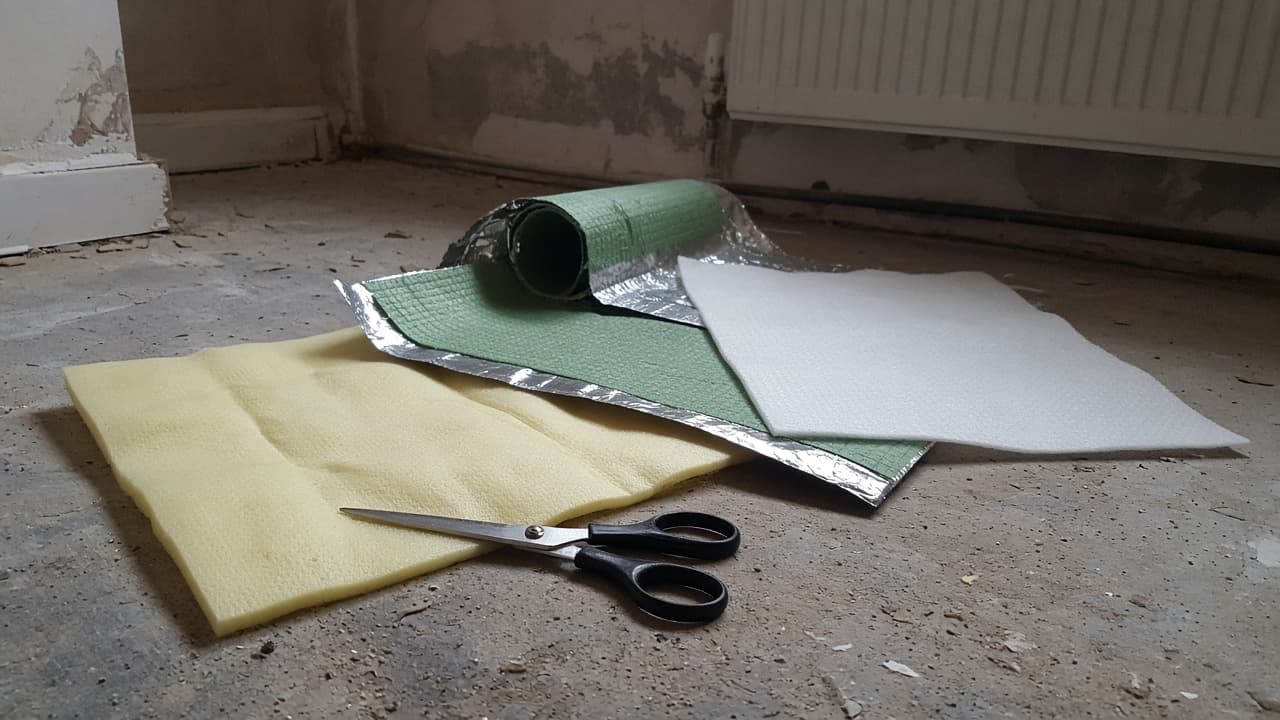
Tools
- Tape measure
- Moisture meter (concrete)
- Sample of your laminate pack
Wrong underlay is the quiet way to ruin a laminate job. Too thin and every footfall thumps into the room below. No vapour barrier on a ground-floor screed and the boards swell at the edges within a season. Choosing well is a short decision once you know the subfloor and the finished thickness you can clear under doors.
Fitting comes after this choice: how to fit underlay for laminate, then how to lay laminate flooring.
What underlay actually does
Underlay sits between the subfloor and the floating laminate. It levels minor roughness, cuts impact sound, and (on the right product) blocks rising damp vapour from concrete. It is not a cure for springy floorboards or a wet screed. Fix movement and moisture first, then buy the sheet.
Most UK packs quote thickness in millimetres (often 2 mm, 3 mm, or 5 mm) and whether a damp-proof membrane (DPM) is built in. Read both numbers. Thickness without a DPM on a ground-floor slab is still the wrong product.
Match the sheet to the subfloor
| Subfloor | Prefer | Avoid |
|---|---|---|
| Ground-floor concrete / screed | Combi underlay with integral DPM, or separate polythene DPM plus foam/XPS | Plain foam with no vapour barrier |
| Upper timber floorboards | Acoustic foam or rubber (higher density) | Thick XPS that makes doors bind without solving bounce |
| Chipboard / plywood over joists | Medium-density foam or rubber; fix squeaks first | Stacking two underlays “for comfort” |
| Over underfloor heating | Maker-approved UFH underlay with low thermal resistance | Thick rubber that traps heat |
Concrete jobs need the moisture path sorted before you open packs: how to lay laminate on concrete. Boards that flex or squeak need fixing before underlay goes down: how to lay laminate on floorboards and how to fix squeaky floorboards.
Foam (PE / PE foam)
Cheap, light, fine for upstairs bedrooms where impact noise is modest. Soft foam compresses in hallways and kitchens. If your laminate already has attached underlay, do not add a second foam sheet unless the manufacturer allows it.
Rubber / high-density acoustic
Heavier and dearer. Better for flats and rooms above living space. It dampens the hollow “drum” sound cheap foam leaves. Check the pack will still clear your doors once laminate thickness is added.
XPS / rigid foam board
Stiffer feel underfoot and useful over slightly uneven screeds within the maker’s limits. Still needs a DPM on ground floors if the board is not a combi product. Score and snap carefully so joints stay tight.
Combi sheets (underlay + DPM)
One roll that includes a vapour film and taped overlaps. Sensible default for UK ground floors. Overlap and tape exactly as printed; a gap at the wall lets vapour through and shows up as edge swell months later.
Thickness and door clearance
Add underlay thickness to laminate thickness, then check every door that swings into the room. A 5 mm rubber plus an 8 mm plank is a different job from 2 mm foam under the same plank. Hallways with several doors are where people discover this late: how to lay laminate in a hallway.
If clearance is tight, plan to undercut door frames for flooring rather than forcing a thinner underlay that will not meet the acoustic need.
Buying mistakes that show up later
- Buying 2 mm foam for a ground-floor lounge because it was on offer, with no DPM.
- Doubling underlay when the laminate has attached foam. Joints peak and warranties vanish.
- Ignoring UFH instructions and laying a thick acoustic mat that the heating cannot push through.
- Choosing by “comfort” alone on bouncy boards. Underlay will not stiffen joists.
When to ask a fitter or surveyor
Stop and get help if a moisture meter reads high on a screed, if boards bounce more than a few millimetres underfoot, or if the room is above a wet cellar with no clear DPM story. New-build warranties sometimes specify an underlay brand; follow that paper rather than a DIY-store special.
Kit checklist for the lay itself: tools needed to lay laminate flooring. If underlay and prep are still deciding DIY versus hire: cost to lay laminate flooring DIY vs fitter.
FAQ
Do I need underlay if my laminate has it attached?
Usually no. Attached underlay is designed as the only layer. Adding a second sheet can make the floor spongy and open click joints. Check the pack insert before you buy a roll.
What underlay for laminate on concrete?
Use a product with an integral DPM, or lay a separate polythene vapour barrier then a compatible foam or XPS. Tape overlaps. Plain foam alone is not enough on a ground-floor slab.
Is thicker underlay always better?
No. Extra thickness eats door clearance and can make a floating floor feel soft without fixing a poor subfloor. Match density and vapour control to the room, then pick the thinnest option that meets those needs.
14 comments