How to Fix Squeaky Floorboards
23 August 2026 Joe HartleyIntermediate1–3 hours7 comments
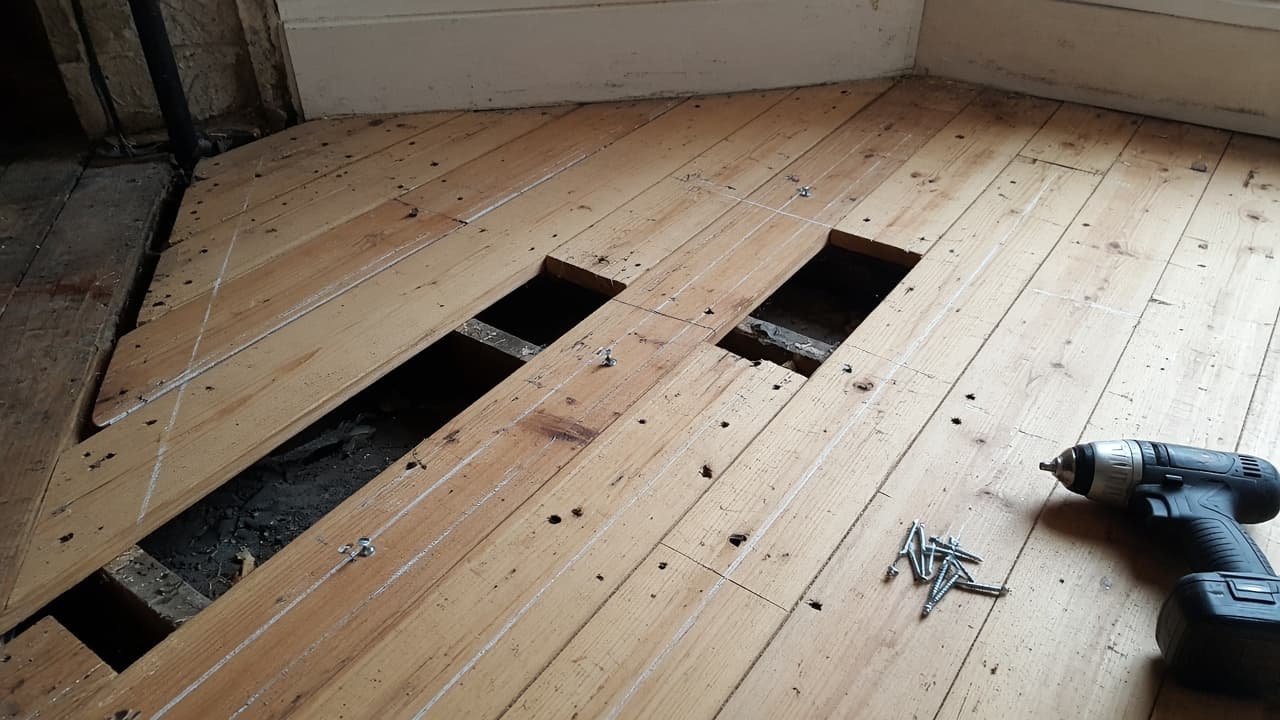
Tools
- Drill and screwdriver bit
- Countersink bit
- Floorboard or wood screws
- PVA or wood glue
- Stud / joist finder or tapping method
- Filler and sandpaper for show boards
A squeak is two surfaces rubbing: board on board, board on joist, or a loose nail working in its hole. Most UK softwood floors can be quietened from above with screws into the joists and a dab of glue in the gap. Some squeaks are a warning: rotten joist ends, overloaded spans, or pipes tight under the boards. Those need a different response than another screw.
If you are about to float laminate over boards, fix the noise first. Underlay will not stop a board that lifts on every step: how to lay laminate on floorboards, how to choose laminate underlay UK.
Find what is rubbing
Walk the floor slowly and mark each squeak with tape. Have a second person walk while you watch from below if there is access (cellar, void, or loft-style floor above). From above, tap across the boards: a dull solid note often sits over a joist; a hollow note sits in the bay.
Joists in older houses are not always on a neat 400 mm grid. Follow the nail lines in the boards; they usually sit over the joists. Avoid drilling a neat row of holes where a copper pipe or cable might run parallel to the boards in the bay.
Quiet the board from above
1. Clear finishes that hide the joint
Lift carpet and underlay, or work on bare boards. You need to see the gaps and the existing nail pattern. Dust the joint so glue can wet the timber.
2. Glue the rubbing edges where you can reach
Open a fine gap with a thin scraper if needed. Work PVA or wood glue down between boards that rub on each other. Wipe squeeze-out. Glue alone rarely holds a board that has lifted off its joist; combine with screws.
3. Screw into the joist, not into empty bay
Predrill and countersink. Drive screws through the board into the joist either side of the squeak. Pull the board down firmly but stop before the screw head crushes soft Victorian pine into a crater. Two screws across a wide board beat one in the middle that splits the tongue.
Use screws, not more nails. Nails work loose again; screws clamp. On painted boards, a dab of PVA in the joint before you drive the screw often kills the last whisper of rub that a dry screw alone leaves.
4. Recheck the walk path
Walk the marked spots. A new squeak one bay over is common once the first board is locked down. Fix those next rather than over-screwing the first board.
5. Fill and finish if the boards stay on show
Fill countersinks, sand flush, and reseal or stain to match. If laminate or carpet is going over the top, flush screws still matter so nothing telegraphs through underlay (how to fit underlay for laminate, how to lay laminate flooring).
When not to screw from above
- You can hear water pipes ticking in the same bay and cannot confirm clear joist lines. Access from below or a plumber’s opinion is safer.
- The board feels soft, dark, or spongy. That is rot, not a loose nail.
- The whole bay bounces. Screwing the top board will not stiffen a failed joist or missing noggin.
- Leasehold or rental rules ban altering the floor structure without consent.
- Stairs and landings often need a specific approach; do not treat them as a simple room bay.
Concrete slabs do not squeak like timber. If you are on screed, noise usually comes from a floating floor above it: how to lay laminate on concrete.
Mistakes that crack boards or miss the joist
- Screwing into the bay between joists. The screw holds nothing and can hit services.
- Over-tightening soft pine until the face splits along the grain.
- Glueing a dusty, paint-filled gap that never bonds.
- Covering the squeak with thick underlay and hoping. It returns as a thud under laminate, especially in hallways (how to lay laminate in a hallway).
When to call a carpenter or structural help
Call someone in if joist ends are rotten at the wall, if spans feel springy across a wide room, if you find notched joists packed with cables, or if the floor has dropped relative to the skirting. Those are structure jobs, not a weekend screw pack.
Doorway work after the floor is solid again: how to undercut door frames for flooring, how to cut laminate around door frames.
FAQ
Can I fix squeaky floorboards from above without lifting them?
Yes in many cases. Locate the joists, glue rubbing edges, and screw the board down into the joist with countersunk wood screws. Lift only if you cannot find the joists safely or need to inspect for rot and pipes.
Will underlay stop squeaky floorboards under laminate?
No. Underlay softens impact sound; it does not clamp a loose board. Fix the squeak, then fit underlay and laminate.
Why did the squeak come back after screwing?
Often the screw missed the joist, a neighbouring board still rubs, or the joist itself moves. Recheck joist position, add a screw on the true centre line, and inspect from below if you can. A screw that pulls up a soft Victorian board into a crater can also create a new rub against its neighbour.
7 comments